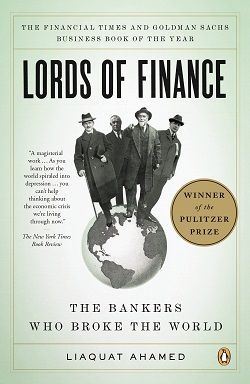
Lords of Finance by Liaquat Ahamed is a masterful exploration of the intricate web of decisions made by four central bankers whose actions precipitated the Great Depression—a calamity that reshaped the global economic landscape and set the stage for World War II. Ahamed’s narrative is not just a historical account; it is a profound examination of the human elements behind economic policy and the far-reaching consequences of those decisions. The book is a compelling reminder of how the actions of a few can reverberate through history, affecting millions of lives.
The central figures in Ahamed's narrative are Montagu Norman of the Bank of England, Émile Moreau of the Banque de France, Hjalmar Schacht of the Reichsbank, and Benjamin Strong of the Federal Reserve Bank of New York. Each of these men is portrayed with remarkable depth, revealing their personalities, motivations, and the psychological burdens they carried. Ahamed’s ability to humanize these historical figures is one of the book's greatest strengths. For instance, Norman is depicted as a neurotic and enigmatic leader, whose obsession with the gold standard blinded him to the emerging economic realities. In contrast, Schacht is characterized as arrogant yet brilliant, a man whose confidence in his own intellect ultimately led to disastrous decisions.
One of the book's central themes is the tension between stability and flexibility in economic policy. The central bankers, united by a common fear of inflation, believed that a return to the gold standard would restore order and stability to the post-World War I economy. However, Ahamed illustrates how this rigid adherence to the gold standard became a straitjacket that stifled economic growth and exacerbated the impending crisis. The author meticulously details how the decisions made in the mid-1920s, which initially appeared to stabilize the global economy, were fundamentally flawed. The illusion of prosperity masked underlying vulnerabilities, and when the stock market crashed in 1929, the world was ill-prepared to respond.
Ahamed’s narrative is rich with historical context, providing readers with a comprehensive understanding of the economic landscape of the time. He deftly weaves together the personal stories of the bankers with the broader economic trends, creating a tapestry that illustrates the interconnectedness of global finance. The book serves as a cautionary tale about the dangers of groupthink and the perils of ignoring dissenting voices. The central bankers, despite their intelligence and expertise, were ultimately unable to foresee the consequences of their actions, leading to catastrophic outcomes.
The character development in Lords of Finance is particularly noteworthy. Ahamed does not shy away from exploring the flaws and vulnerabilities of his subjects. For example, Benjamin Strong, often seen as a visionary leader, is revealed to be a deeply wounded man, burdened by the weight of his responsibilities. This nuanced portrayal adds depth to the narrative, allowing readers to empathize with the central bankers even as they grapple with the consequences of their decisions. Ahamed’s ability to blend personal and professional narratives creates a compelling portrait of the men who held the fate of the global economy in their hands.
Another significant theme in the book is the impact of economic policy on ordinary people. Ahamed emphasizes that the decisions made by these central bankers were not merely abstract concepts; they had real-world implications for millions of individuals and families. The Great Depression led to widespread unemployment, poverty, and social upheaval, and Ahamed does an admirable job of connecting the dots between the actions of the bankers and the suffering experienced by the populace. This human element is what makes the book resonate so deeply, as it serves as a reminder that economic policies are not just numbers on a spreadsheet—they are decisions that affect lives.
In terms of its overall impact, Lords of Finance is a vital contribution to the discourse on economic history and policy. Ahamed’s insights are particularly relevant in today’s context, as the world grapples with its own economic challenges. The book serves as a potent reminder of the fallibility of central bankers and the potential consequences of their decisions. As we navigate the complexities of modern finance, Ahamed’s work encourages us to reflect on the lessons of the past and to consider the broader implications of our economic choices.
In comparison to other works on economic history, such as Adam Tooze’s Crashed or Charles Kindleberger’s The World in Depression, Ahamed’s narrative stands out for its focus on the personal stories of the central bankers. While Tooze and Kindleberger provide valuable analyses of economic systems and crises, Ahamed’s approach humanizes the figures at the center of the storm, making the historical events more relatable and impactful. This unique perspective enriches the reader's understanding of the complexities of economic decision-making and its far-reaching consequences.
In conclusion, Lords of Finance is an essential read for anyone interested in economics, history, or the interplay between the two. Liaquat Ahamed has crafted a compelling narrative that not only informs but also engages the reader on an emotional level. The book serves as a powerful reminder of the responsibilities that come with economic power and the profound impact that decisions made in the boardrooms of central banks can have on the lives of ordinary people. It is a timely and relevant work that resonates with the challenges we face today, making it a must-read for those seeking to understand the complexities of our financial systems.



