
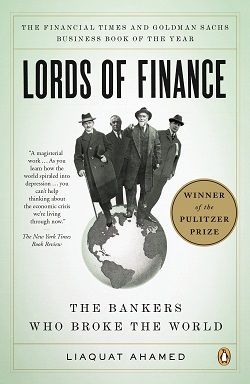
Lords of Finance
With penetrating insights for today, this vital history of the world economic collapse of the late 1920s offers unforgettable portraits of the four men whose personal and professional actions as heads of their respective central banks changed the course of the twentieth century
It is commonly believed that the Great Depression that began in 1929 resulted from a confluence of events beyond any one person’s or government’s control. In fact, as Liaquat Ahamed reveals, it was the decisions taken by a small number of central bankers that were the primary cause of the economic meltdown, the effects of which set the stage for World War II and reverberated for decades.
In Lords of Finance, we meet the neurotic and enigmatic Montagu Norman of the Bank of England, the xenophobic and suspicious Émile Moreau of the Banque de France, the arrogant yet brilliant Hjalmar Schacht of the Reichsbank, and Benjamin Strong of the Federal Reserve Bank of New York, whose façade of energy and drive masked a deeply wounded and overburdened man. After the First World War, these central bankers attempted to reconstruct the world of international finance. Despite their differences, they were united by a common fear—that the greatest threat to capitalism was inflation— and by a common vision that the solution was to turn back the clock and return the world to the gold standard.
For a brief period in the mid-1920s they appeared to have succeeded. The world’s currencies were stabilized and capital began flowing freely across the globe. But beneath the veneer of boom-town prosperity, cracks started to appear in the financial system. The gold standard that all had believed would provide an umbrella of stability proved to be a straitjacket, and the world economy began that terrible downward spiral known as the Great Depression.
As yet another period of economic turmoil makes headlines today, the Great Depression and the year 1929 remain the benchmark for true financial mayhem. Offering a new understanding of the global nature of financial crises, Lords of Finance is a potent reminder of the enormous impact that the decisions of central bankers can have, of their fallibility, and of the terrible human consequences that can result when they are wrong.
Pages
- Page 1
- Page 2
- Page 3
- Page 4
- Page 5
- Page 6
- Page 7
- Page 8
- Page 9
- Page 10
- Page 11
- Page 12
- Page 13
- Page 14
- Page 15
- Page 16
- Page 17
- Page 18
- Page 19
- Page 20
- Page 21
- Page 22
- Page 23
- Page 24
- Page 25
- Page 26
- Page 27
- Page 28
- Page 29
- Page 30
- Page 31
- Page 32
- Page 33
- Page 34
- Page 35
- Page 36
- Page 37
- Page 38
- Page 39
- Page 40
- Page 41
- Page 42
- Page 43
- Page 44
- Page 45
- Page 46
- Page 47
- Page 48
- Page 49
- Page 50
- Page 51
- Page 52
- Page 53
- Page 54
- Page 55
- Page 56
- Page 57
- Page 58
- Page 59
- Page 60
- Page 61
- Page 62
- Page 63
- Page 64
- Page 65
- Page 66
- Page 67
- Page 68
- Page 69
- Page 70
- Page 71
- Page 72
- Page 73
- Page 74
- Page 75
- Page 76
- Page 77
- Page 78
- Page 79
- Page 80
- Page 81
- Page 82
- Page 83
- Page 84
- Page 85
- Page 86
- Page 87
- Page 88
- Page 89
- Page 90
- Page 91
- Page 92
- Page 93
- Page 94
- Page 95
- Page 96
- Page 97
- Page 98
- Page 99
- Page 100
- Page 101
- Page 102
- Page 103
- Page 104
- Page 105
- Page 106
- Page 107
- Page 108
- Page 109
- Page 110
- Page 111
- Page 112
- Page 113
- Page 114
- Page 115
- Page 116
- Page 117
- Page 118
- Page 119
- Page 120
- Page 121
- Page 122
- Page 123
- Page 124
- Page 125
- Page 126
- Page 127
- Page 128
- Page 129
- Page 130
- Page 131
- Page 132
- Page 133
- Page 134
- Page 135
- Page 136
- Page 137
- Page 138
- Page 139
- Page 140
- Page 141
- Page 142
- Page 143
- Page 144
- Page 145
- Page 146
- Page 147
- Page 148
- Page 149
- Page 150
- Page 151
- Page 152
- Page 153
- Page 154
- Page 155
- Page 156
- Page 157
- Page 158
- Page 159
- Page 160
- Page 161
- Page 162
- Page 163