Page 46
Then I'm out on the dock in the cold, walking up the gravel toward the flashlights like a woman with nothing to hide and a life on each shoulder, and I let my boots be loud.
They converge on me at the gate, beams in my face, and behind the glare Max's voice says, “Easy, easy, it's the firefighter,” and the beams drop, and that's when I see her. Val, by the unmarked car, in her duty jacket at two in the morning, gray-faced with the night she's having, looking at me like a building that's lying to her.
“Serrano.” It comes out flat. “You'd better have a story.”
“She texted me a goodbye.” The lie comes out smooth, terrible, practiced now. “Hours ago. Told me not to look for her. I've been driving the riverfront since midnight looking anyway, every dock, every pier, because I'm exactly that stupid. The truck's at the diner because I've been walking the yards on foot.”




The river keeps moving under the dock ends while she weighs it. Behind her, Max angles a bright flashlight at the ground and says nothing.
“At two in the morning.”
“You sat in your car outside threats' houses for years, off the clock.” I hold her eyes. “Lena told me. You know what this is.”
Her jaw shifts, and I hate myself for aiming Lena's truth as cover, one more theft from a person who has never once stolen from me. Max has a notebook out and isn't writing in it. The two foot-beams hang back by the fence, waiting on a word from her, ready to walk the docks, thirty seconds from the judas gate, from the launch, from the woman in the dark with two bags on her shoulders, and I open my mouth and spend the last of whatever I am.
“Val. She's not down here. But I know where she's going to be, because she told me, in the goodbye, like a parting gift, like I couldn't do anything with it from inside her head.” I let my voice shake, and it doesn't take acting. “She said there's one debt left. The supplier. Corvan Building Systems, the yard on the north side, all their stock and twenty years of their paper. She said it would be tonight, before the city wakes up, and then she's gone for good.”
The gravel lot goes quiet, sirens far off, the river working against the pilings. Val looks at me, and I make myself stand in it, the full read, the one she gives a structure before she sends people into it, her eyes going over my face corner to corner, looking for the seam. She holds my gaze five seconds, then ten. My heart goes hard enough to hurt.
“Roll everything to Corvan,” she says, not looking away from me. “North yard. Now.”
The lot detonates into motion, beams swinging, doors, engines, Max already on the radio calling the box, and the two foot-marshals come off the fence line at a jog with their backs to the last dock, to the boathouse, to the dark water gate facing the ebb. I stand still in the middle of it with my hands in my jacket pockets so nobody sees them.
Val stays one more second. She steps in close, out of every earshot, and what's in her face isn't the interrogation anymore, it's worse, it's kindness.
“I know what tonight cost you,” she says, low. “Whatever else you've been, you were loyal to this house when it counted, and I won't forget it. Handing over somebody you love.” She shakes her head once. “Twenty-six years on this job and I've never had to do it. I hope I never find out if I could.”
She gets in the car and the convoy pulls north, light bars dark, running silent, and I stand alone in the gravel between the roses in their barrels and the chain-link, holding her thanks in my chest where it burns straight through everything it touches. She thanked me. For loyalty. The word's going to live in me like shrapnel, working toward the surface for years.
I walk the eight blocks back to the truck, building the list of everything that can still hang me, the deleted thread first. I drive north, the legal direction, the home direction, both hands on the wheel, and the city slides past with its one red glow sinking behind me. I tell myself the decision is made. I made it on a blanket in a boat with her body still warm against mine.
I'm a woman who stays. I run into buildings.
The tide turns before dawn and a wooden boat will slip out on it with no lights and no name anyone checks and that will be the end of the only fire that ever followed me home.
I make it four miles before I stop lying to myself.
26




ZARA
The ebb starts to whisper along the hulls a little after four, and I'm aboard the Marguerite in the dark, doing the work of leaving with hands that know it by heart and a chest that has gone on strike.
I moved aboard an hour after Dani walked up the gravel and gave herself to the flashlights. I sat in the black of the boathouse listening to the convoy pull north, her lie doing its work, engines and tires and then nothing, the yard returning to wind and water. When I trusted the quiet, I came down the dock with my bags and stepped onto the boat I bought for a future that had no people in it. I do the stowage and the fuel valves and the engine checks by feel, the chart light hooded red, the go-bag wedged where I can reach it with the shoebox riding in its pocket, and below, on the quarter berth, I spread the wool blanket from the old launch, because some thefts you commit against your own discipline, and a blanket that smells of her is one of mine.
That's the trouble with the last hour before dawn. The work is done, the tide isn't ready, and there's nothing left aboard to do but remember.
So I sit at the chart table with the red light off and let it have me, all of it, the whole month, run in order like evidence.
It opens on a ladder in the smoke, a stranger's arms locked around my body, the first time anybody carried me anywhere. Her face was on the news the next morning, soot to the eyebrows, all facts, no flourish. On the curb outside the Calloway, she knelt in front of me with my borrowed earrings in my pocket and wrote her number on a coat-check stub with a pen that barely worked. In the rain outside the Saltbox, the wall was cold at my back and her mouth was anything but, and I walked away on legs I had to instruct.
Bring your suspicion, I told her, and she carried it up forty floors and set it on my counter next to the scotch and wanted me anyway, with those eyes that have hauled people out of the dark for twelve years. I squared her boots by my island and blushed about it like an amateur. She slept with her fist in my shirt. She audited my breakfast and let me keep the lie about the grease. She covered my folded hands in a red booth the night I finally said my sister's name to a living soul. She tore my sweater at the seam and bit my shoulder and demanded the floor, and afterward, with the shower running, I chose for once not to check what was mine to guard, because I was so tired of standing trial in my own home.
And then there's today, hours ago, still warm enough to touch. Her cold hands warming on my skin. The sound she made when my mouth found her, low and wrecked, swallowed by the boathouse. The grip of her thighs, the salt of her, her heel braced on the bench and her fist in the blanket, the arch of her off the boards when she stopped holding anything back.
I don't go under for anyone, she said, against my mouth, with her face wet. You're every exception I have. I've been awake for two days on adrenaline and grief and a love that arrived too late to be convenient, and my body doesn't care about any of it, my body wants her again with a plain animal honesty that would embarrass a younger me. I press my palm flat to my own sternum, where her hand isn't, and I make myself breathe.
She said no. I make myself hold that too, because pretending otherwise would be one more lie in a year I've sworn off them. She knelt over me with tears on her face and looked at the options of her life and chose the one where she stays what she is—a woman who runs into buildings. It was the right choice. That's the cut of it. I love her because she's the woman who said no to me. The very hinge I love is the one that swings her away.
Continue exploring

The Billionaire’s Secret

Christmas Surrender

Under Kid’s Protection

Sweet Inferno
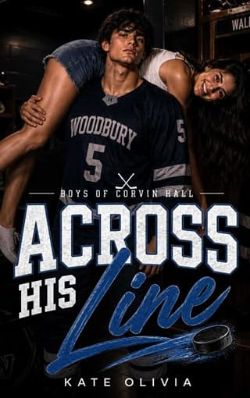
Across His Line

Under His Jersey

Unwrapped

The Quiet Mountain Man’s Curvy Pumpkin Beauty

The Lumberjack’s Pumpkin Spice Problem

The Mountain Man’s Curvy Plaid Surprise

Harvested By the Charming Mountain Man