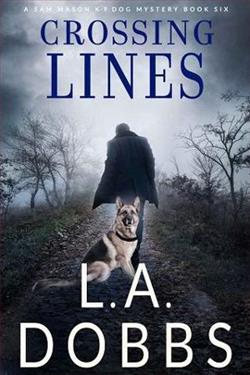
In the bustling world of contemporary mystery novels, few manage to strike a balance between captivating characters and a tightly woven plot while still delivering a poignant message. L.A. Dobbs' "Crossing Lines" admirably accomplishes all three, establishing itself as not just a mere addition to the genre, but a standout piece in its own right. This book, the latest installment in the ongoing series featuring the sharp-minded Detective Sam Jenkins, promises suspense and an emotional rollercoaster that both entertains and provokes thought in its readers.
At the heart of "Crossing Lines" is an unsettling case of a missing teenager, Abby Colton, from a small town in New Hampshire. The disappearance itself offers an intense start to the narrative, but it’s the layers of the town's dark underbelly that Dobbs skillfully peels back that elevate the story beyond a traditional detective mystery. Jenkins, who has transitioned from big-city life to the supposed tranquility of rural law enforcement, uses his seasoned instincts to navigate through a mesh of local politics and clandestine relationships.
One of Dobbs’ strengths is her ability to create multi-dimensional characters. Sam Jenkins is portrayed not only as a detective but as a man grappling with his own moral and ethical dilemmas. The secondary characters, including Deputy Rebecca Hadley and the Colton family, are equally well-drawn. Dobbs provides them with depth and personal stakes that enrich the narrative, making the reader’s involvement with them both compelling and emotionally engaging. As the investigation deepens, so do the complexities of these characters, who are all portrayed with nuances that avoid the cliché and predictability often found in genre archetypes.
The prose of "Crossing Lines" is crisp and engaging, moving the story at a pace that keeps the reader hooked without sacrificing attention to detail. This balancing act is particularly noteworthy in Dobbs’ vivid descriptions of the New Hampshire setting – from the expansive frozen lakes to the claustrophobic interiors of the town’s dilapidated buildings that seem to mirror the confinement of the secrets they house. Dobbs uses setting not just as a backdrop but as an integral part of the story, showing how place can influence and shape the community and its inhabitants.
Thematically, "Crossing Lines" challenges the reader to consider the notion of ‘crossing lines’ in a broader sense; it’s not just the legal boundaries Sam Jenkins tries to enforce, but also the moral and ethical boundaries that each character negotiates. This reflection on morality is cleverly woven through the narrative, emerging most prominently when the detective confronts his own preconceptions and biases. The title thus serves as a motif for the narrative’s deeper questions about justice, community, and personal responsibility.
Furthermore, Dobbs tackles several sensitive issues with respect and grace, including adolescent vulnerability and the devastating impact of neglect. These themes are never presented in a preachy tone but instead are naturally integrated into the storyline, providing a richer, more immersive experience for the reader. This approach not only heightens the stakes of the central mystery but also resonates on a human level, adding layers of complexity to what might otherwise be a straightforward detective tale.
The narrative construction also deserves mention. Dobbs employs a multi-perspective storytelling technique that allows readers to see the situation from various vantage points, which makes the eventual convergence of these narratives all the more satisfying. As the disparate clues and character paths begin to intertwine, Dobbs masterfully ramps up the suspense, leading to a conclusion that is both unpredictable and satisfying. This technique, while complex, is handled with such finesse that it seems effortless, a testament to Dobbs’ skill as a storyteller.
In conclusion, "Crossing Lines" by L.A. Dobbs is a standout mystery that offers much more than just the resolution of a crime. It is a deep dive into the complexities of small-town America, a nuanced look at the human psyche, and a meditation on the nature of justice. It's a book that not only mystery enthusiasts but also readers looking for rich, character-driven narratives will appreciate. With its intriguing plot, robust character development, and thoughtful exploration of ethical dilemmas, "Crossing Lines" is a compelling read that leaves a lasting impression and eagerly anticipates future books in this series.



