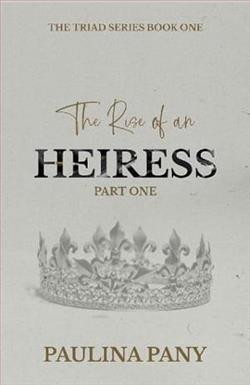
The Rise of an Heiress, penned by Paulina Pany, is a captivating novel that delves into themes of power, betrayal, and the quest for identity amidst the opulent yet treacherous tapestry of aristocratic society. This review explores the intricacies of the narrative, the depth of character development, and the comprehensive styling that Pany employs to enthrall her readers.
Set against the gilded backdrop of early 20th century Europe, the novel traces the life of Lydia Cavert, a young woman who unexpectedly learns that she is the sole heiress to the fortune of a grand but dilapidated estate in the English countryside. From the stark, unloved corridors of her new home, Lydia finds herself thrust into the highest echelons of society, where every smile hides a dagger and every gesture could be a checkmate. The novel’s beginning sets a powerful tone, steeping the reader immediately into a dynamic where heritage and wealth impose both privileges and lethal burdens.
The character of Lydia is crafted with a meticulousness that is both intensive and expansive. Pany does not merely create a character; she breathes life into Lydia, making her both imperious and vulnerable. Her transformation from an innocent, somewhat naive young girl into a shrewd, calculating, and yet deeply empathetic heiress forms the crux of the narrative. This metamorphosis is penned with a fidelity to psychological realism that is often missing in traditional rags-to-riches stories. Lydia's internal conflicts, coupled with her external challenges, drive the narrative forward at a brisk pace that keeps the reader engrossed.
One of the hallmark strengths of Pany’s writing is her ability to depict complex relationships with nuance and depth. The interplay between Lydia and her distant cousin, James Rowland, oscillates between cordiality and rivalry, encapsulating a multifaceted dynamic that mirrors the overarching themes of power and inheritance. Furthermore, Lydia’s interactions with her staff, particularly with her maid, Elsie, are rendered with a sensitivity that adds a rich layer to the social exploration of the era. These relationships are not mere subplots but are integral in shaping the trajectory of Lydia’s growth and the unfolding of the novel’s central mysteries.
The narrative is also significantly enhanced by Pany’s robust world-building. She reconstructs early 20th century aristocracy with an eye for detail that is both commanding and convincing. From lavish ballrooms to clandestine meetings in dimly lit corridors, every setting is imbued with an atmosphere that is palpable. The descriptive prose not only furnishes the visual spectacle but also subtly underscores the societal decay and the underlying rot within the opulence, an ever-present theme that Pany skillfully weaves throughout the storyline.
Pany also excels in the element of suspense and plot twists. As Lydia unravels the secrets of her new-found lineage, the reader is taken on a labyrinthine journey rich with unexpected revelations and sharp turns. The pacing here is particularly noteworthy—Pany knows just when to pull back and when to surge forward, a rhythm that keeps the pages turning without relent. Moreover, the elements of mystery are not just thrill-inducing but are deeply intertwined with Lydia's personal growth, making each revelation impactful beyond the immediate shock value.
However, no novel is without its weaknesses. At points, the plot does tread into the realm of predictability, especially concerning the romantic subplot between Lydia and a prospective suitor. Some character arcs can feel rushed or underexplored, particularly in the latter half of the book where the main focus narrows significantly on Lydia’s challenges. These moments, though few, do detract from an otherwise meticulously built narrative structure.
In conclusion, The Rise of an Heiress by Paulina Pany is a compelling blend of historical fiction and psychological drama, replete with a strong female protagonist whose journey is both heart-rending and inspiring. The novel not only offers a riveting glimpse into the complexities of inheritance and power but also serves as a poignant exploration of self-discovery and human resilience. The rich historical backdrop, combined with the intricate plotting and deeply drawn characters, makes this book a memorable read. Fans of historical fiction looking for a story with depth, suspense, and a powerful female lead will find The Rise of an Heiress to be a rewarding experience.



