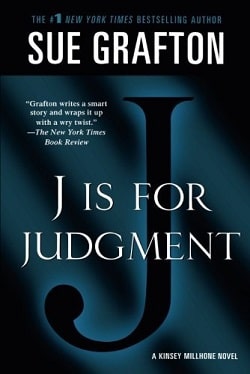
Sue Grafton's J is for Judgment marks the tenth installment in the beloved Kinsey Millhone series, a collection that has captivated readers with its unique blend of mystery, humor, and a strong female protagonist. In this novel, Grafton delves into themes of identity, deception, and the complexities of human relationships, all while maintaining the sharp wit and engaging storytelling that fans have come to expect.
The plot centers around Wendell Jaffe, a man presumed dead for five years after his boat was found adrift off the Baja coast. The narrative kicks off when his former insurance agent spots him alive in a bar, prompting a deeper investigation into his past. Kinsey Millhone, the series' intrepid private investigator, is hired by California Fidelity to uncover the truth behind Jaffe's supposed death and the subsequent payout of a substantial life insurance policy to his wife, Dana Jaffe. This setup not only serves as a catalyst for the mystery but also intertwines with Kinsey's own exploration of her family history, creating a rich tapestry of interconnected stories.
One of the most compelling aspects of J is for Judgment is the way Grafton weaves together the personal and the professional. As Kinsey digs deeper into Jaffe's life, she finds herself reflecting on her own past and the narratives she has constructed about her family. This introspection adds a layer of depth to her character, making her more relatable and human. Grafton skillfully balances the investigation with Kinsey's personal revelations, allowing readers to see how the two stories are not only parallel but also intricately linked.
The theme of judgment is prevalent throughout the novel, both in the literal sense of Kinsey's investigation and in the broader context of how we perceive others. The title itself, J is for Judgment, serves as a reminder of the often hasty conclusions we draw about people based on limited information. Kinsey's journey reveals that the truth is rarely black and white; instead, it is a complex interplay of motives, circumstances, and human fallibility. Grafton challenges readers to consider their own judgments and the potential consequences of those snap decisions.
Character development is another strong suit of Grafton's writing. Kinsey Millhone continues to evolve as a character, grappling with her own insecurities and the weight of her past. Her interactions with other characters, particularly Dana Jaffe, provide insight into the emotional toll of betrayal and loss. Dana's struggle with her husband's deception and the aftermath of his actions adds a poignant layer to the narrative, highlighting the impact of Jaffe's choices on those left behind. Grafton does an excellent job of creating multifaceted characters who feel real and relatable, each with their own motivations and flaws.
The pacing of J is for Judgment is well-executed, with Grafton maintaining a steady rhythm that keeps readers engaged. The plot unfolds gradually, allowing for moments of tension and suspense that build toward a satisfying conclusion. Grafton's knack for detail and her ability to create vivid settings enhance the reading experience, transporting readers to the sun-soaked landscapes of Baja California and the gritty streets of Santa Teresa. The atmospheric descriptions serve to ground the story, making the characters' experiences all the more tangible.
In comparison to other works in the mystery genre, Grafton's Kinsey Millhone series stands out for its strong character focus and the integration of personal growth within the framework of a detective story. Authors like Sara Paretsky and Marcia Muller have also created memorable female detectives, but Grafton's approach is uniquely introspective. Kinsey is not just solving crimes; she is also on a quest for self-discovery, making her journey resonate on a deeper level.
Overall, J is for Judgment is a testament to Sue Grafton's skill as a storyteller. The novel is rich with themes of identity, judgment, and the complexities of human relationships, all wrapped in a compelling mystery that keeps readers guessing. Kinsey Millhone remains an iconic figure in the world of crime fiction, and this installment further cements her place in the pantheon of great literary detectives. Grafton's ability to blend humor with serious themes creates a reading experience that is both entertaining and thought-provoking.
For fans of the series, J is for Judgment is a must-read, and for newcomers, it serves as an excellent entry point into Kinsey's world. Grafton's writing continues to shine, and her characters remain as engaging as ever. As Kinsey herself reflects on the nature of judgment, readers are left with a sense of introspection, questioning their own perceptions and the stories they tell about themselves and others.



