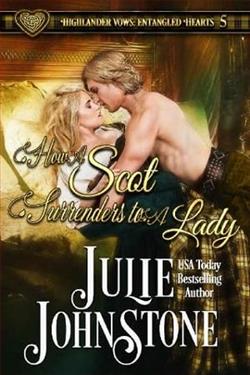
Julie Johnstone’s How a Scot Surrenders to a Lady is a captivating tale set against the rugged backdrop of the Scottish Highlands, weaving together themes of love, memory, and destiny. This historical romance is not just a story of two individuals drawn together by fate; it is a rich tapestry of emotional depth, character growth, and the struggle between personal desires and the burdens of the past.
The narrative centers around Cameron MacLeod, a Highland warrior tasked with a mission for the king that quickly spirals into chaos. His encounter with Sorcha Stewart, a fair-haired beauty who has lost her memory due to an ambush, sets the stage for a compelling exploration of vulnerability and strength. Cameron is portrayed as a man of honor and duty, yet he is also deeply flawed, grappling with the prophecy that foretells Sorcha’s potential to destroy him. This internal conflict makes him a relatable character, as he embodies the struggle between duty and desire, a theme that resonates throughout the novel.
Sorcha, on the other hand, is a character of remarkable resilience. Awakening in a strange place with no recollection of her past, she embodies the archetype of the innocent heroine. Her initial trust in Cameron, despite her amnesia, highlights her innate bravery and intuition. As she begins to piece together her fragmented memories, the tension escalates, particularly when she learns of her ties to Cameron’s enemies. This revelation not only complicates their burgeoning romance but also serves as a catalyst for Sorcha’s character development. She transitions from a passive figure to an active participant in her fate, showcasing her growth as she confronts her past and the implications it has for her future with Cameron.
Johnstone excels in her character development, crafting a dynamic relationship between Cameron and Sorcha that evolves from initial attraction to a profound emotional connection. Their chemistry is palpable, and the author skillfully balances moments of tenderness with the tension of their circumstances. The “foolish, searing kiss” mentioned in the blurb is a pivotal moment that encapsulates their struggle; it is both a moment of weakness and a turning point that propels them toward deeper intimacy. This duality is a hallmark of Johnstone’s writing, as she deftly navigates the complexities of love in the face of adversity.
The themes of memory and identity are intricately woven into the narrative. Sorcha’s amnesia serves as a metaphor for the struggle to reclaim one’s identity amidst chaos. As she gradually uncovers her past, the reader is taken on a journey of self-discovery that parallels her romantic journey with Cameron. This exploration of memory is not just personal; it reflects the broader historical context of the Highland clans and their tumultuous relationships, adding layers of depth to the story.
Moreover, the prophecy that looms over Cameron and Sorcha adds an element of suspense and intrigue. It raises questions about fate versus free will, compelling both characters to confront their destinies. Cameron’s reluctance to seek help from his brothers, whom he feels he must prove himself equal to, underscores the theme of pride and the importance of community. This aspect of the story is particularly resonant, as it highlights the necessity of vulnerability and the strength found in seeking support from loved ones.
Johnstone’s prose is evocative, painting vivid images of the Scottish landscape and immersing the reader in the historical setting. The dialogue is rich and authentic, capturing the essence of the characters’ cultural backgrounds while also making their emotions relatable to a contemporary audience. The pacing of the story is well-balanced, with moments of tension interspersed with quieter, introspective scenes that allow for character reflection and growth.
In comparison to other historical romances, such as those by authors like Julie Garwood or Elizabeth Hoyt, Johnstone’s work stands out for its focus on the psychological aspects of love and the impact of past traumas on present relationships. While Garwood often infuses humor and light-hearted banter into her narratives, Johnstone leans into the emotional weight of her characters’ experiences, creating a more somber yet deeply affecting story. This choice may resonate more with readers who appreciate a nuanced exploration of love intertwined with personal and historical conflict.
Overall, How a Scot Surrenders to a Lady is a beautifully crafted romance that delves into the complexities of love, memory, and identity. Julie Johnstone has created a compelling narrative that not only entertains but also invites readers to reflect on the nature of fate and the power of love to transcend even the darkest of pasts. With its rich character development and emotional depth, this novel is sure to leave a lasting impression on fans of historical romance.
For those interested in exploring this enchanting tale, it is available on platforms like Amazon and Goodreads.



