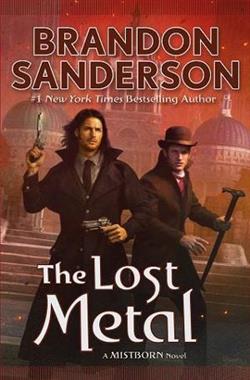
Brandon Sanderson’s The Lost Metal is the thrilling conclusion to the Wax and Wayne series, part of his expansive Cosmere universe. As with his previous works, Sanderson masterfully intertwines intricate world-building, compelling character arcs, and profound themes that resonate deeply with readers. This novel not only wraps up the narrative threads established in earlier books but also expands the scope of the Cosmere, introducing new elements that challenge the characters and the very fabric of their world.
At the heart of The Lost Metal is Waxillium Ladrian, a character who has evolved significantly throughout the series. Once a frontier lawman, Wax has transitioned into a senator, grappling with the complexities of political life while still haunted by his past. His relentless pursuit of the shadowy organization known as the Set, which has personal ties to his family, serves as a driving force in the narrative. Sanderson does an exceptional job of portraying Wax’s internal struggles, particularly his tumultuous relationship with Harmony, the god of Scadrial. This conflict is not merely a backdrop; it is a catalyst for Wax’s growth as he confronts his identity and the expectations placed upon him.
Alongside Wax, we have Detective Marasi Colms and her partner Wayne, who bring their own unique perspectives and challenges to the story. Marasi’s character development is particularly noteworthy; she evolves from a supporting role into a key player in the unfolding drama. Her recruitment by offworlders introduces a fascinating layer to the plot, as it raises questions about loyalty, power, and the implications of external intervention in Scadrial’s affairs. Wayne, with his trademark humor and charm, provides a counterbalance to the more serious themes, reminding readers of the importance of camaraderie and levity even in dire circumstances.
Thematically, The Lost Metal delves into the nature of power and the moral complexities that accompany it. The Set’s manipulation of Allomancy and their quest for dominance highlight the dangers of unchecked ambition and the lengths individuals will go to achieve their goals. Sanderson does not shy away from exploring the darker aspects of human nature, particularly through the lens of political corruption and the impact it has on society. The tension between Elendel and the Outer Cities serves as a microcosm for broader societal issues, making the narrative feel relevant and timely.
Another significant theme is the concept of heroism. Wax’s journey is a poignant exploration of what it means to be a hero in a world rife with moral ambiguity. His struggle to embrace his role as the Sword of Harmony is emblematic of the larger question: can one truly be a hero without sacrificing personal beliefs and relationships? Sanderson challenges traditional notions of heroism, suggesting that true bravery often lies in vulnerability and the willingness to confront one’s own flaws.
Sanderson’s world-building continues to impress, with The Lost Metal offering a rich tapestry of cultures, religions, and histories. The introduction of Trell, a god worshipped by the Set, adds a new dimension to the narrative, intertwining the fates of the characters with cosmic forces beyond their comprehension. This expansion of the Cosmere is a testament to Sanderson’s creativity and his ability to weave complex narratives that span multiple worlds and characters.
The pacing of the novel is expertly crafted, with a balance of action, intrigue, and character development that keeps readers engaged from start to finish. Sanderson’s signature style of layering plot twists and revelations ensures that the stakes remain high throughout the story. The climactic moments are both thrilling and emotionally resonant, providing a satisfying payoff for the investment readers have made in these characters and their journeys.
In comparison to other works within the fantasy genre, The Lost Metal stands out for its intricate plotting and character depth. Readers familiar with authors like Patrick Rothfuss or Robert Jordan will appreciate Sanderson’s ability to create a richly detailed world while maintaining a focus on character-driven storytelling. The moral dilemmas faced by Wax and his companions echo the complexities found in George R.R. Martin’s works, yet Sanderson’s approach is ultimately more optimistic, emphasizing hope and redemption amidst chaos.
Overall, The Lost Metal is a fitting conclusion to the Wax and Wayne series, encapsulating the essence of Sanderson’s storytelling prowess. It is a tale of courage, sacrifice, and the enduring power of friendship, set against a backdrop of political intrigue and cosmic stakes. Fans of the series will find closure in the arcs of beloved characters while also being left with tantalizing hints of what lies ahead in the broader Cosmere. Sanderson’s ability to blend personal and epic narratives ensures that The Lost Metal will resonate with readers long after they turn the final page.
In conclusion, The Lost Metal is not just a book; it is an experience that invites readers to reflect on their own beliefs about power, heroism, and the choices that define us. For those who have journeyed through the world of Scadrial, this novel is a must-read, and for newcomers, it serves as an enticing entry point into Sanderson’s masterful universe.



