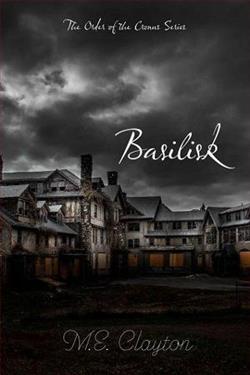
M.E. Clayton's Basilisk is a captivating exploration of ambition, privilege, and the hidden machinations of secret societies, all set against the backdrop of a prestigious university. The narrative revolves around two central characters, Saxton Voss and Hastings Martin, whose lives become intertwined in a web of intrigue and danger as they navigate the complexities of their elite world.
The story begins with Saxton Voss, a character molded by wealth and power, who embodies the archetype of the rational, calculating individual. His upbringing has prepared him to be a formidable player in the game of life, and he approaches his final year at Hales University with a sense of purpose and control. However, the arrival of Hastings Martin disrupts his carefully laid plans. Hastings, on the other hand, represents a more optimistic and adventurous spirit. Raised with kindness and a sense of gratitude, she is eager to embrace the opportunities that life presents her. This contrast between Saxton's calculated demeanor and Hastings' spirited enthusiasm sets the stage for a compelling dynamic that drives the narrative forward.
One of the most intriguing aspects of Basilisk is its exploration of secret societies, particularly the Order of the Cronus. Clayton delves into the allure and danger of such organizations, prompting readers to question the lengths to which individuals will go to secure their futures. The Order serves as a metaphor for the hidden power structures that often govern elite circles, and the stakes are raised significantly as Saxton finds himself entangled in its complexities. The author skillfully weaves elements of suspense and mystery throughout the plot, keeping readers engaged as they uncover the secrets that lie beneath the surface of Hales University.
Character development is a strong point in this novel. Saxton's journey is particularly compelling as he grapples with the expectations placed upon him by his family and the Order. His initial confidence begins to waver as he confronts the moral implications of his choices, especially as his relationship with Hastings deepens. Hastings, too, undergoes significant growth. Initially portrayed as a carefree and privileged young woman, she becomes increasingly aware of the darker realities surrounding her. Her evolution from naivety to a more nuanced understanding of her circumstances adds depth to her character and enhances the overall narrative.
The chemistry between Saxton and Hastings is palpable, and their relationship serves as the emotional core of the story. Their interactions are charged with tension, both romantic and dramatic, as they navigate the treacherous waters of their respective ambitions and the dangers posed by the Order. Clayton does an excellent job of portraying the complexities of their relationship, highlighting the push and pull between desire and duty. As they face external threats and internal conflicts, readers are drawn into their world, rooting for their success while fearing the consequences of their choices.
Thematically, Basilisk tackles issues of privilege, power, and the moral dilemmas that arise when ambition collides with personal relationships. The novel raises important questions about the nature of success and the sacrifices one must make to achieve it. Saxton's journey, in particular, serves as a cautionary tale about the dangers of losing oneself in the pursuit of power. Hastings' character, meanwhile, embodies the struggle to maintain one's integrity in a world that often prioritizes ambition over ethics.
Clayton's writing style is engaging and immersive, with vivid descriptions that bring the university setting to life. The pacing is well-balanced, allowing for moments of tension and reflection that enhance the overall reading experience. The dialogue is sharp and authentic, capturing the nuances of the characters' personalities and their evolving dynamics.
In comparison to other works that explore similar themes, such as The Secret History by Donna Tartt or Beautiful Disaster by Jamie McGuire, Basilisk stands out for its unique blend of suspense and romance within the context of a secret society. While Tartt's novel delves into the darker aspects of elitism and morality, Clayton's approach is more focused on the personal stakes involved in navigating such a world. Similarly, while McGuire's work emphasizes the tumultuous nature of young love, Basilisk adds layers of intrigue and danger that elevate the stakes for its characters.
Overall, M.E. Clayton's Basilisk is a thought-provoking and engaging read that skillfully combines elements of romance, suspense, and character development. The exploration of secret societies and the moral complexities of ambition make it a compelling addition to the genre. Readers will find themselves captivated by Saxton and Hastings' journey, eager to uncover the secrets that lie within the Order of the Cronus and the choices that will ultimately define their futures.



