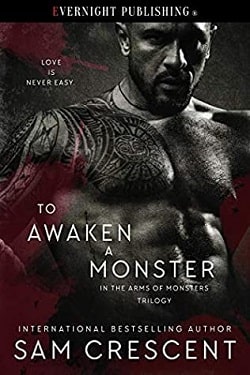
To Awaken a Monster (In the Arms of Monsters 1), written by Sam Crescent, plunges readers into the gritty, intense world of motorcycle clubs with a dark twist, blending romance with suspense to create an emotionally charged atmosphere. Sam Crescent, known for her ability to create complex, flawed characters, does not disappoint with this new series, which promises to explore themes of redemption, loyalty, and the destructive power of love.
The novel revolves around the life of River, a young woman entangled in the harsh realities of life within a motorcycle club through her family ties. Her character is portrayed with depth and nuance, making her relatable and sympathetically tragic. Crescent's narrative effectively captures River's internal struggles, weaving a poignant story of a girl trying to find her place in a world dominated by men who live on the fringes of society.
River's tumultuous relationship with Bishop, the club's future leader, is the centerpiece of the novel. Bishop is a character crafted with layers of complexity that are slowly peeled back as the story progresses. His portrayal oscillates between being a villain and a hero, a lover and a fighter, which keeps the readers on their toes. Their love story is tumultuous and filled with conflict, marked by moments of tenderness that contrast sharply with the brutality of their environment. Crescent does an excellent job in portraying a toxic relationship that paradoxically promises salvation for both characters.
The author does not shy away from the darker aspects of life within a motorcycle club. Themes of violence, power, betrayal, and revenge are explored with brutal honesty, and Crescent’s sharp, concise writing intensifies the impact of these themes. The supporting characters are well-developed, each adding a layer to the complex web of relationships and hierarchy within the club. Through these characters, Crescent explores how loyalty and love can become warped by power and ambition.
Structurally, the novel is well-paced, with a good balance between action sequences and character-driven scenes. The dialogue is crisp and authentic, matching the rawness of the club’s lifestyle. The settings are vividly described, transporting the reader into a world that is both thrilling and terrifying. This sense of place not only enhances the mood but also amplifies the stakes, adding a palpable tension to the narrative.
The topics of consent, masculinity, and personal freedom are tackled with sensitivity and complexity in To Awaken a Monster. Crescent’s approach to these issues is thought-provoking, urging readers to question the societal norms that define and often confine us. However, this also means that the book might not cater to all due to its raw and unfiltered portrayal of the darker sides of human nature and society.
Moreover, the book could be seen as a critique of the often misogynistic, patriarchal structures that dominate similar real-world communities, showing both the strength and the vulnerability of women entangled in such environments. River’s journey, rife with obstacles, serves as a canvas for exploring women’s resilience and their fight for independence and respect in a male-dominated world.
In conclusion, Sam Crescent’s To Awaken a Monster is a gripping read that offers more than just a glimpse into the chaotic world of outlaw motorcycle clubs. It is a thoughtful exploration of the complex dynamics between love and hate, freedom and captivity, and right and wrongdoing. With its complex characters, intense emotional conflicts, and a setting that is as compelling as it is daunting, this novel is a powerful start to what promises to be an unforgettable series. Readers who appreciate romance that challenges the boundaries of traditional narratives will find this book a compelling and rewarding read.



