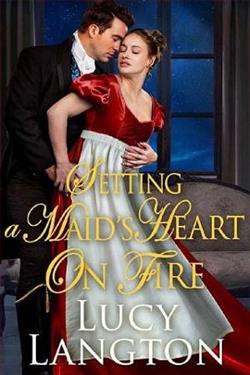
In Setting a Maid's Heart on Fire, Lucy Langton crafts a compelling narrative that intertwines themes of love, identity, and the struggle for freedom against a backdrop of societal constraints. The story follows Penelope Dupont, a maid whose life spirals into chaos after the death of her benevolent master. Forced to endure the cruelty of his widow and the predatory advances of a vile Comte, Penelope's plight resonates with readers as she grapples with her desperate circumstances.
The novel opens with a vivid portrayal of Penelope's despair, effectively setting the tone for her tumultuous journey. Langton's writing shines in her ability to evoke empathy for Penelope, whose resilience is tested at every turn. The author skillfully illustrates the harsh realities of class disparity and the limited agency afforded to women of Penelope's station. This theme of entrapment is further emphasized when Penelope, in a bid for freedom, assumes the identity of her younger mistress. This act of desperation not only propels the plot forward but also raises questions about the nature of identity and the lengths one will go to escape a painful past.
As Penelope navigates her new life, she encounters Anthony Grafton, the newly minted Duke of Chattham. Anthony's character is introduced with a sense of duty and burden; he inherits a title fraught with financial troubles and familial obligations. Langton does an admirable job of developing Anthony's character, showcasing his internal conflict between duty and desire. His initial intention to marry for financial stability is quickly overshadowed by his undeniable attraction to Penelope, leading to a passionate romance that defies societal expectations.
The chemistry between Penelope and Anthony is palpable, and Langton captures the essence of their connection through beautifully written intimate scenes. Their relationship evolves from one of necessity to a profound exploration of love that transcends their respective social standings. This transformation is not without its challenges, as both characters must confront their pasts and the secrets they harbor. The tension between their burgeoning love and the looming threat of exposure creates a gripping narrative that keeps readers on the edge of their seats.
One of the novel's strengths lies in its exploration of the theme of forbidden love. Penelope and Anthony's romance is fraught with societal implications, and Langton does not shy away from depicting the consequences of their choices. The stakes are high, and the fear of scandal looms large, adding depth to their relationship. This aspect of the story invites comparisons to other historical romances, such as Pride and Prejudice by Jane Austen or The Duke and I by Julia Quinn, where societal norms dictate the course of love. However, Langton's narrative is distinct in its raw portrayal of the characters' struggles, making their love story feel both urgent and relatable.
Character development is another area where Langton excels. Penelope's evolution from a frightened maid to a woman who dares to claim her desires is inspiring. Her journey is marked by moments of self-discovery and empowerment, which resonate with readers who have faced their own struggles for autonomy. Anthony, too, undergoes significant growth as he learns to prioritize love over duty, ultimately challenging the expectations placed upon him by society. Their individual arcs are intricately woven together, culminating in a satisfying resolution that feels earned and authentic.
The pacing of the novel is well-balanced, with moments of tension interspersed with tender scenes that allow readers to savor the developing romance. Langton's descriptive prose immerses readers in the historical setting, painting a vivid picture of the world Penelope and Anthony inhabit. The rich details enhance the reading experience, making it easy to visualize the opulence of the Duke's estate and the stark contrast of Penelope's previous life as a maid.
However, while the story is engaging, some readers may find certain plot points predictable, particularly in the realm of romantic tropes. The trope of mistaken identity and the ensuing complications are familiar to fans of the genre, but Langton's execution brings a fresh perspective that keeps the narrative lively. The emotional stakes are high, and the characters' vulnerabilities add layers to the story that elevate it beyond mere formulaic romance.
In conclusion, Setting a Maid's Heart on Fire is a captivating historical romance that deftly explores themes of love, identity, and resilience. Lucy Langton's ability to create complex characters and weave a compelling narrative makes this novel a worthwhile read for fans of the genre. The interplay between societal expectations and personal desires is masterfully portrayed, leaving readers with a sense of hope and the belief that love can indeed triumph over adversity. For those seeking a passionate love story set against a richly detailed historical backdrop, this book is sure to ignite the heart.



