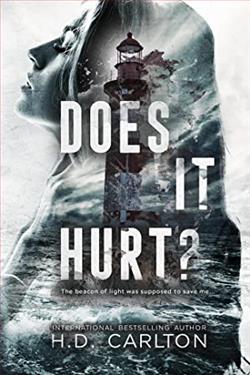
Does It Hurt? by H.D. Carlton ventures deep into the psychological and emotional landscapes of torment and redemption, blending elements of thriller and romance into a gripping narrative that challenges the reader's perceptions of justice and love. This book, with its intricate plot and deeply flawed characters, creates a chaotic yet utterly realistic depiction of human resilience and vulnerability.
The narrative revolves around the life of Tessa Lowell, a young woman who finds herself engulfed in a devastating ordeal. After being abducted, Tessa's life is torn apart, and she is forced to face unimaginable horrors. The author, H.D. Carlton, portrays Tessa’s psychological turmoil with such intense detail and sensitivity that readers are inevitably drawn into the character’s fractured world, feeling every ounce of her fear and defiance.
An intriguing aspect of Carlton's approach is how the story oscillates between past and present events, revealing Tessa’s life before the abduction and the damaged existence she contends with afterwards. This method effectively builds suspense and enriches the reader's understanding of the protagonist's motives and actions. Carlton’s skillful manipulation of time enhances the depth of the narrative, allowing the tension to build at a measured pace that keeps the reader engaged and anxious.
The character development in Does It Hurt? is robust and thoughtful. Beyond Tessa, other characters like Ethan, her captor, are portrayed with layers of complexity that defy simple categorization into hero or villain. Carlton explores themes of captivity not only in the physical sense but also through psychological bonds, examining how relationships, even under the most harrowing circumstances, can form and evolve. The dynamic between Tessa and Ethan is unsettling, provocative, and sadly tender, pushing the boundaries of conventional romance into darker, more controversial waters.
Carlton also delves into the aftermath of trauma with authenticity and care. The psychological scars and the struggle towards healing are depicted without resorting to clichés about recovery. Instead, Tessa's journey is fraught with setbacks and discoveries, mirroring the non-linear path that real-life recovery often entails. This representation adds a significant layer of realism to the novel, providing a more nuanced exploration of suffering and survival.
The prose of Does It Hurt? is another element where Carlton shines. It is both sharp and evocative, capable of delivering powerful emotions and visuals with minimalistic elegance. Carlton’s choice of words often leaves a haunting resonance, making the experience of reading not only engaging but also sensorial. This meticulous attention to language helps to convey the extreme psychological states and the atmospheric tension that pervades the novel.
Critically, while the book’s intense subject matter is its strength, it could also be a point of contention for some readers. The themes explored within its pages are dark and could be distressing. The depiction of violence and psychological torment is graphic at times, which necessitates a word of caution for sensitive readers. However, for those who can brave through its darker patches, the book offers a profound commentary on the human spirit’s capacity to endure and adapt.
From a thematic standpoint, Does It Hurt? does not shy away from exploring difficult questions about morality, redemption, and the blurred lines between love and dependency. The climax of the book, which I will not spoil, provides a controversial resolution that might leave readers divided. Regardless, it is clear that Carlton intends to provoke thought and discussion, making this book much more than just a suspenseful read.
Overall, Does It Hurt? by H.D. Carlton is a compelling psychological thriller that tests the limits of its characters and its readers. It combines an emotionally charged narrative with well-crafted suspense and profound thematic inquiries into the nature of damage and recovery. For those drawn to psychologically complex and edgily crafted narratives, this book is certainly recommendable, bearing in mind the emotional and psychological investment it necessitates.



