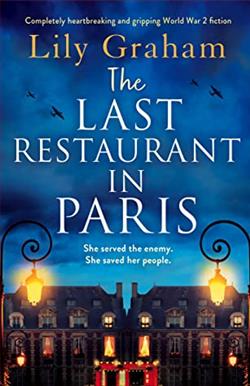
'The Last Restaurant in Paris' by Lily Graham is a poignant and evocative historical novel that transports readers to the heart of occupied Paris during World War II. The narrative unfolds in two timelines: the harrowing days of 1944, where we meet Marianne, the restaurant owner who serves the enemy while concealing her true feelings, and the present day, where her granddaughter Sabine grapples with the legacy left behind. This dual narrative structure not only enriches the storytelling but also allows for a deeper exploration of themes such as identity, betrayal, and the complexities of heroism.
At its core, the novel delves into the moral ambiguities faced by individuals during wartime. Marianne is portrayed as a woman caught in a web of survival, forced to serve German soldiers in her restaurant to protect her family and community. Graham masterfully illustrates the internal conflict that Marianne experiences; her outward charm and hospitality mask a heart filled with resentment and sorrow. The restaurant, a place of laughter and music, becomes a symbol of the duality of human nature—where joy coexists with despair. This theme resonates deeply, as it reflects the struggles of many who lived under oppressive regimes, forced to make choices that would haunt them forever.
As the story shifts to Sabine, the narrative takes on a contemporary lens that highlights the generational impact of trauma and the quest for identity. Sabine's discovery of her grandmother's past serves as a catalyst for her own journey of self-discovery. The faded green awning of the restaurant becomes a physical manifestation of the weight of history that Sabine must confront. Graham skillfully portrays Sabine's initial reluctance to embrace her grandmother's legacy, as she grapples with the stigma attached to Marianne's actions. This internal struggle is relatable and poignant, as it mirrors the universal quest for understanding one’s roots and the desire to reconcile with the past.
The character development in 'The Last Restaurant in Paris' is particularly noteworthy. Marianne is a richly layered character whose motivations are explored with sensitivity and depth. Her transformation from a seemingly complicit figure to a woman of resilience and sacrifice is compelling. Graham does not shy away from depicting the harsh realities of war, and through Marianne, she illustrates the lengths to which individuals will go to protect their loved ones. The emotional weight of Marianne's choices is palpable, and readers are left to ponder the complexities of morality in times of crisis.
Sabine, on the other hand, embodies the modern struggle of reconciling with a painful legacy. Her journey is not just about uncovering the truth about her grandmother but also about finding her place in a world that often feels unwelcoming. The discovery of the hidden passport serves as a turning point in the narrative, propelling Sabine into a deeper investigation of her family's history. This quest for truth is a powerful motif that resonates with readers, as it speaks to the broader human experience of seeking understanding and closure.
Graham's writing is both lyrical and evocative, painting a vivid picture of Paris during a tumultuous time. The descriptions of the restaurant, the bustling streets, and the somber atmosphere of war-torn Paris are immersive, allowing readers to feel as though they are walking alongside the characters. The contrast between the vibrant life of the restaurant and the grim realities outside its doors serves to heighten the emotional stakes of the story. Graham’s ability to weave historical detail with rich character development creates a tapestry that is both engaging and thought-provoking.
The themes of 'The Last Restaurant in Paris' extend beyond the personal struggles of its characters; they also touch on broader societal issues such as the nature of collaboration, the burden of legacy, and the quest for redemption. The novel invites readers to reflect on the complexities of human behavior in the face of adversity. It challenges the notion of black-and-white morality, illustrating that the choices made in desperate times are often fraught with ambiguity.
In comparison to other historical novels set during World War II, such as Kristin Hannah's 'The Nightingale' or Anthony Doerr's 'All the Light We Cannot See', Graham's work stands out for its intimate focus on the personal ramifications of war. While many novels explore the grand narratives of resistance and survival, 'The Last Restaurant in Paris' hones in on the individual stories that often go untold. It emphasizes that history is not just made up of battles and political decisions, but also of the everyday lives of those who lived through it.
Overall, 'The Last Restaurant in Paris' is a beautifully crafted novel that resonates on multiple levels. It is a story of love, loss, and the enduring quest for identity amidst the shadows of the past. Lily Graham has created a narrative that is both heartbreaking and hopeful, inviting readers to reflect on the complexities of human nature and the legacies we inherit. This book is a must-read for anyone interested in historical fiction that delves into the intricacies of personal and collective memory.
For those looking to explore this compelling tale, it is available on platforms like Amazon and Goodreads.



