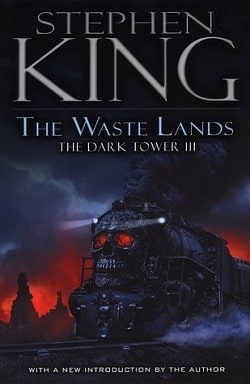
Stephen King’s The Waste Lands, the third installment in his monumental Dark Tower series, is a masterful blend of fantasy, horror, and Western elements that continues to expand the rich tapestry of Roland Deschain’s quest for the elusive Dark Tower. Following the events of The Gunslinger and The Drawing of the Three, this novel deepens the narrative complexity and character development while introducing new layers of existential dread and philosophical inquiry.
Set several months after the previous book, The Waste Lands finds Roland, Eddie Dean, and Susannah Dean navigating the treacherous landscape of Mid-World. The trio has evolved significantly; Eddie has overcome his heroin addiction, and Susannah has reconciled her dual identities into a singular, formidable personality. This transformation is not merely a backdrop but a crucial element that underscores one of the novel’s central themes: the struggle for identity and the power of personal redemption. King expertly illustrates how trauma and addiction can fracture the self, yet also how resilience and companionship can lead to healing.
At the heart of the story is the paradox of memory and existence, particularly embodied in the character of Jake Chambers. Roland’s decision to save Jake has created a rift in the fabric of reality, leading to a haunting exploration of fate and consequence. The notion of ka, or destiny, is a recurring motif throughout the series, and here it is poignantly examined through the lens of Roland’s guilt and the burden of his choices. The duality of Jake’s existence—living in a world where he has already died—adds a layer of complexity that resonates with readers, prompting reflections on the nature of love, loss, and the inescapable ties that bind us to our past.
The narrative takes the reader through the desolate city of Lud, a place that serves as a stark representation of decay and despair. King’s vivid descriptions of this dystopian landscape evoke a sense of foreboding, making Lud feel like a character in its own right. The city is filled with danger, from the menacing Gasher to the psychotic Tick-Tock Man, each embodying the chaos and brutality of this world. King’s ability to create such palpable tension is a testament to his skill as a storyteller, and the encounters in Lud are some of the most gripping in the series.
One of the standout elements of The Waste Lands is the introduction of Blaine the Mono, a sentient train that serves as both a mode of transportation and a formidable antagonist. Blaine’s riddles and philosophical musings provide a unique blend of humor and horror, challenging the protagonists in ways that are both intellectually stimulating and deeply unsettling. This interaction not only propels the plot forward but also serves as a commentary on the nature of intelligence and madness, echoing themes found in works by authors such as Philip K. Dick and Isaac Asimov.
Character development is another area where King excels in this installment. Roland, often seen as a stoic and solitary figure, is revealed to be a deeply flawed hero grappling with his past decisions. His relationship with Jake is particularly poignant, as it highlights the emotional stakes of his quest. The bond between the characters is tested repeatedly, and their interactions are imbued with a sense of urgency and desperation. King’s exploration of friendship and loyalty amidst adversity is both heartwarming and heartbreaking, making the reader invest emotionally in their journey.
Thematically, The Waste Lands delves into the concepts of time, memory, and the cyclical nature of existence. King weaves a narrative that challenges the linear perception of time, suggesting that past actions reverberate through the present and future. This philosophical underpinning elevates the story beyond mere adventure, inviting readers to ponder the implications of their own choices and the interconnectedness of all beings.
In comparison to other epic fantasy series, such as J.R.R. Tolkien’s The Lord of the Rings or George R.R. Martin’s A Song of Ice and Fire, King’s work stands out for its unique blend of genres and its focus on the psychological and emotional landscapes of its characters. While Tolkien’s world is steeped in myth and legend, and Martin’s is characterized by political intrigue and moral ambiguity, King’s narrative is rooted in the human experience, making it relatable and profoundly impactful.
Overall, The Waste Lands is a compelling continuation of Roland Deschain’s odyssey, showcasing Stephen King’s prowess as a storyteller. The novel is rich with themes of identity, redemption, and the complexities of human relationships, all set against a backdrop of a vividly imagined world. King’s ability to intertwine horror with profound philosophical questions creates a reading experience that is both thrilling and thought-provoking.
For fans of the Dark Tower series, this installment is a must-read, as it not only advances the overarching narrative but also deepens the emotional resonance of the characters’ journeys. As Roland and his companions continue their quest, readers are left eagerly anticipating what lies ahead in their pursuit of the Dark Tower, a symbol of hope and despair intertwined.



