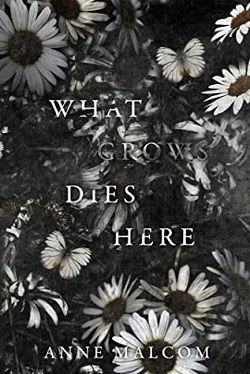
Anne Malcom's What Grows Dies Here is a compelling exploration of love, privilege, and the inevitable destruction that often accompanies deep emotional connections. The story revolves around Wren Whitney, a character who embodies the complexities of wealth and the superficiality that can accompany a life of luxury. From the outset, the blurb sets the tone for a narrative that promises both adventure and heartache, and Malcom delivers on this promise with a gripping tale that is as intoxicating as it is tragic.
Wren is introduced as a product of her environment—growing up in Beverly Hills, she is accustomed to a life filled with opulence and adventure. Her upbringing in boarding schools and private jets paints a picture of a young woman who seemingly has it all. However, as the narrative unfolds, it becomes clear that Wren's life is not as glamorous as it appears. The author skillfully juxtaposes Wren's external wealth with her internal struggles, revealing a character who is both fearless and deeply flawed.
The central theme of What Grows Dies Here revolves around the dichotomy of love and destruction. Wren's assertion that she will only ever love one man, who will ultimately be her downfall, sets the stage for a poignant exploration of the nature of love itself. Malcom delves into the idea that love can be both a source of strength and a catalyst for ruin. Wren's fear of love is palpable; she has never truly meant the words "I love you" when spoken to men, indicating a protective mechanism she has developed to shield herself from vulnerability. This fear is further complicated when she meets the man who will change everything—a figure described as "darkness itself," embodying both allure and danger.
Character development is a standout aspect of Malcom's writing. Wren is not merely a one-dimensional character; she is layered and complex. Her relationships with her girlfriends provide a stark contrast to her romantic entanglements, showcasing a different side of her personality. The camaraderie and love she shares with her friends highlight her capacity for genuine affection, even as she struggles to extend that same depth of feeling to a romantic partner. This duality makes Wren relatable and compelling, as readers can empathize with her internal conflict.
The male lead, shrouded in mystery and darkness, serves as a catalyst for Wren's transformation. Their connection is electric, filled with tension and an undeniable chemistry that draws Wren in despite her better judgment. Malcom's portrayal of their relationship is both passionate and tumultuous, capturing the essence of a love that is as intoxicating as it is destructive. The author does not shy away from depicting the raw emotions that accompany such a relationship, making the reader acutely aware of the stakes involved.
As the story progresses, the consequences of Wren's choices become increasingly apparent. Malcom expertly weaves a narrative that is both thrilling and heartbreaking, as Wren's journey unfolds in unexpected ways. The author’s ability to create tension and suspense keeps readers on the edge of their seats, eagerly anticipating the next twist in Wren's tumultuous love story. The pacing of the novel is well-executed, allowing for moments of reflection amidst the chaos, which adds depth to the overall reading experience.
Another significant theme in the book is the exploration of identity and self-discovery. Wren's journey is not just about love; it is also about understanding who she is outside of her wealth and privilege. As she navigates her feelings for the enigmatic man, she is forced to confront her own fears and insecurities. This journey of self-discovery is relatable and resonates with anyone who has grappled with the complexities of love and identity.
Malcom's writing style is both lyrical and evocative, drawing readers into Wren's world with vivid descriptions and emotional depth. The author has a knack for crafting sentences that linger in the mind long after they have been read, making the emotional weight of the story all the more impactful. The dialogue is sharp and authentic, capturing the nuances of relationships and the intricacies of human emotion.
In comparison to other contemporary romance novels, What Grows Dies Here stands out for its unflinching portrayal of love's darker side. While many romance novels tend to focus on the blissful aspects of love, Malcom does not shy away from the reality that love can lead to pain and destruction. This willingness to explore the complexities of love sets the book apart from others in the genre, making it a thought-provoking read.
Overall, What Grows Dies Here is a beautifully written and emotionally charged novel that delves deep into the themes of love, privilege, and self-discovery. Anne Malcom has crafted a story that is both captivating and haunting, leaving readers with a sense of longing and reflection. Wren Whitney's journey is one that will resonate with many, as it encapsulates the universal struggle of balancing love and self-preservation. This book is a must-read for anyone who appreciates a romance that challenges the norms and explores the darker facets of human connection.



