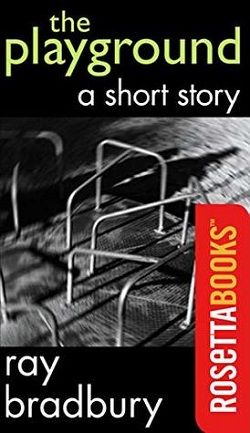
In "The Playground," Ray Bradbury takes an everyday, mundane setting and infuses it with a sense of creeping horror and psychological depth that is both unsettling and captivating. This short story, while not as well-known as some of Bradbury's other works like "Fahrenheit 451" or "The Martian Chronicles," nonetheless showcases his ability to explore complex themes within the framework of speculative fiction.
The story centers around Charles Underhill, a protective father who is tormented by the notion of his young son, Jim, being exposed to the cruel and bullying behaviors that plague typical playgrounds. Bradbury expertly navigates the inner turmoil of Charles, using his fears to examine broader questions about parenthood, protection, and the loss of innocence. The playground, as depicted by Bradbury, becomes more than a simple physical locale; it emerges as a symbol of the real world that every child must eventually confront and come to terms with.
Bradbury’s prose is, as always, lush and vivid. His descriptions of the playground are imbued with a sinister quality that transforms it into a battleground of sorts, where innocence is contested and reality is harshly imposed. The swings, sandpits, and seesaws are not merely equipment for play but are charged with metaphorical significance, each element reflecting the societal forces that Charles fears will corrupt his son’s purity and vulnerability.
The narrative is driven by Charles's decision to confront his past demons at the playground, which he believes will safeguard his son from similar traumas. This decision leads to a chilling realization that the playground is eternal, a timeless vortex that attracts every generation into its fold, each child vulnerable to its latent dangers. The encounter Charles has with the enigmatic playground attendant further heightens the tension, culminating in a twist that is both shocking and deeply reflective of Bradbury's themes of time, memory, and the cyclical nature of life.
What makes "The Playground" particularly effective is its ability to merge the ordinary with the extraordinary. Bradbury takes a common fear — the anxiety surrounding a child’s exposure to harsh realities — and elevates it to a universal dread, one that encompasses not just physical but existential threats. His choice to keep the supernatural elements subtle yet impactful allows the psychological drama to unfold in a manner that is both relatable and terrifying.
Criticism of the story might center on its brevity, which leaves certain aspects, such as the background of the mysterious playground attendant, somewhat underexplored. However, this can also be seen as a strength, as Bradbury communicates so much atmosphere and tension within a compact narrative, demonstrating his mastery of the short story format. Furthermore, the open-ended conclusion serves not only to haunt the reader but also invites them to ponder the implications of the story long after turning the final page.
In conclusion, "The Playground" by Ray Bradbury is a profound piece of literary horror that delves into the anxieties of parenthood, the inevitability of loss of innocence, and the societal structures that influence the development of a child. Through exquisite language and compelling symbolism, Bradbury transforms an ordinary setting into a place of profound metaphysical questioning. It is a poignant reminder of the unseen battles that are fought in daily life and the invisible scars they leave, making it a must-read for those who appreciate stories that resonate on multiple levels. Despite its brevity, this story packs a powerful punch, highlighting Bradbury’s capacity to leave a lasting impact with remarkably few words.



