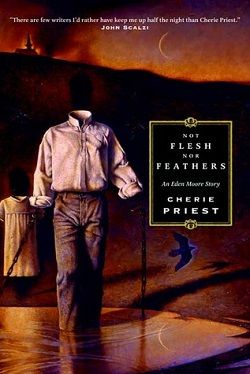
Not Flesh Nor Feathers, the third installment in Cherie Priest's Eden Moore series, is a haunting exploration of memory, justice, and the dark undercurrents of history that shape our present. Set against the backdrop of Chattanooga, Tennessee, this novel deftly intertwines supernatural elements with a gritty realism that reflects the complexities of urban life and the often-overlooked narratives of marginalized communities. Priest's skillful storytelling invites readers to delve into a world where the past is never truly buried, and the consequences of forgotten atrocities can resurface with terrifying force.
The narrative begins with a series of disappearances that, at first glance, seem unremarkable—homeless men and skater kids vanishing without a trace. However, as the story unfolds, it becomes clear that these disappearances are merely the surface of a much deeper and darker mystery. When a TVA dam fails and the Tennessee River swells, it dredges up the remains of twenty-nine victims from a long-ago slaughter, their restless spirits awakening to seek justice for their untimely deaths. This premise sets the stage for a chilling exploration of how history can haunt a city, and how the echoes of past violence can manifest in the present.
At the heart of the novel is Eden Moore, a reluctant medium who finds herself drawn into the chaos as the river reveals its secrets. Eden is a richly developed character, embodying both strength and vulnerability. Her journey throughout the book is not just one of confronting external threats but also of grappling with her own identity and the weight of her abilities. Priest masterfully portrays Eden's internal struggles, making her a relatable and compelling protagonist. As she navigates the complexities of her gift, readers witness her growth from a hesitant participant to a determined force for resolution, embodying the theme of personal agency in the face of overwhelming odds.
Thematically, Not Flesh Nor Feathers delves into the concept of justice—what it means, who gets to claim it, and the lengths to which individuals will go to achieve it. The novel raises poignant questions about societal neglect, particularly regarding those who are often marginalized and forgotten. The initial victims of the river's wrath—homeless individuals and disenfranchised youth—serve as a stark reminder of how easily society can overlook the lives of the vulnerable. Priest's choice to center these characters in her narrative is both a bold and necessary commentary on social justice, urging readers to reflect on the implications of their own indifference.
Moreover, the supernatural elements of the story serve as a powerful metaphor for unresolved trauma. The twenty-nine spirits that rise from the river are not merely vengeful apparitions; they are the embodiment of collective grief and the demand for acknowledgment. Priest's portrayal of these spirits is nuanced, allowing them to be both terrifying and tragic. Their desire for justice becomes a catalyst for Eden's own journey, forcing her to confront not only the ghosts of the past but also the societal structures that allowed such injustices to occur in the first place.
Priest's writing is evocative and atmospheric, painting a vivid picture of Chattanooga as both a living city and a graveyard of secrets. The river itself becomes a character in its own right, a symbol of both life and death, and the duality of its nature reflects the complexities of the human experience. The tension builds as the narrative progresses, with the rising waters serving as a countdown to the inevitable confrontation between the living and the dead. This sense of urgency propels the story forward, keeping readers on the edge of their seats as they anticipate the unfolding of the mystery.
In terms of pacing, Priest strikes a commendable balance between action and introspection. The novel is peppered with moments of tension and suspense, interspersed with quieter reflections that allow for character development and thematic exploration. This rhythm enhances the overall impact of the story, making the climactic moments all the more powerful. The resolution, while satisfying, does not shy away from the complexities of justice; it acknowledges that some wounds may never fully heal, and that the quest for understanding is an ongoing journey.
Comparatively, Not Flesh Nor Feathers resonates with other works in the supernatural genre that tackle themes of social justice and historical trauma, such as Toni Morrison's Beloved or Neil Gaiman's The Ocean at the End of the Lane. Like these authors, Priest uses the supernatural as a lens through which to examine the human condition, exploring how the past continues to shape our present realities. However, Priest's unique voice and perspective, particularly through the lens of a Southern Gothic narrative, set her apart, offering readers a fresh and compelling take on familiar themes.
In conclusion, Not Flesh Nor Feathers is a masterful blend of supernatural horror and social commentary, showcasing Cherie Priest's talent for weaving intricate narratives that resonate on multiple levels. With its rich character development, haunting themes, and atmospheric setting, this novel is a must-read for fans of the genre and those seeking a deeper understanding of the complexities of justice and memory. As the river reveals its secrets, readers are left to ponder the stories that remain hidden beneath the surface, reminding us that some truths are too powerful to remain buried.



