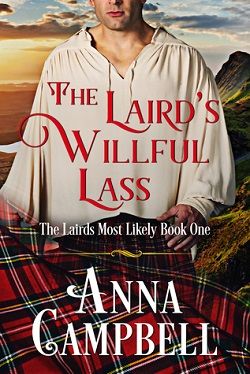
Anna Campbell’s The Laird's Willful Lass is a captivating historical romance that immerses readers in the rugged beauty of the Scottish Highlands while exploring themes of autonomy, passion, and the complexities of love. Set against the backdrop of a picturesque estate, the novel introduces us to two compelling protagonists whose fiery personalities clash and ultimately ignite a transformative relationship.
The story centers around Fergus Mackinnon, the autocratic Laird of Achnasheen, who embodies the quintessential Highland hero. From a young age, Fergus has been molded by the responsibilities of leadership, and he carries an air of authority that commands respect. His character is well-developed, showcasing a blend of strength and vulnerability. Fergus’s desire to maintain control over his life and those around him is challenged by the arrival of Marina Lucchetti, a spirited artist from Florence. Marina is not just a breath of fresh air; she is a tempest that disrupts Fergus’s carefully curated world.
Marina’s character is equally compelling. As a successful female artist in a male-dominated society, she represents the struggle for independence and self-expression. Her determination to carve her own path resonates with modern readers, making her a relatable and inspiring figure. The initial tension between Marina and Fergus is palpable, as they both embody the archetypes of their respective worlds—Fergus as the steadfast laird and Marina as the defiant artist. Their interactions are charged with witty banter and underlying sexual tension, setting the stage for a romance that is both tumultuous and passionate.
One of the novel’s central themes is the struggle for autonomy. Marina’s journey is not just about falling in love; it’s about asserting her right to choose her own destiny. The conflict between her desire for independence and Fergus’s traditional views on gender roles creates a rich narrative tension. Campbell skillfully navigates this theme, allowing readers to witness the evolution of both characters as they confront their preconceived notions about love and partnership. The dialogue is sharp and engaging, often highlighting the societal expectations placed upon them, which adds depth to their relationship.
The setting of the Scottish Highlands serves as more than just a backdrop; it becomes a character in its own right. Campbell’s vivid descriptions of the landscape enhance the romantic atmosphere and reflect the emotional states of the characters. The lochs, mountains, and rolling hills symbolize the obstacles that Fergus and Marina must overcome in their relationship. The natural beauty of Achnasheen contrasts with the internal struggles of the protagonists, creating a dynamic interplay between environment and emotion.
As the story unfolds, the chemistry between Fergus and Marina intensifies, leading to moments of undeniable passion. Campbell does an excellent job of portraying the physical attraction between the two characters without overshadowing the emotional depth of their connection. The love scenes are tastefully written, balancing sensuality with the characters’ emotional journeys. This balance is crucial, as it allows readers to invest in their relationship beyond mere physical attraction.
Another noteworthy aspect of the novel is its exploration of gender dynamics. Fergus’s initial resistance to Marina’s independence reflects the societal norms of the time, but as the story progresses, he begins to challenge his own beliefs. This character growth is essential, as it demonstrates that love can be a transformative force, capable of breaking down barriers and fostering understanding. Marina, in turn, learns to navigate her feelings for Fergus while staying true to herself, creating a partnership that is both passionate and respectful.
While The Laird's Willful Lass is a standalone novel, it also serves as the first installment in the The Lairds Most Likely series. This sets the stage for future stories that may explore similar themes of love, autonomy, and the complexities of relationships in historical contexts. Readers who enjoy strong character development and rich historical settings will find themselves eagerly anticipating the next installment.
In comparison to other historical romances, such as those by Julia Quinn or Lisa Kleypas, Campbell’s work stands out for its focus on the internal struggles of the characters. While many romances emphasize the external obstacles faced by couples, Campbell delves deeper into the psychological and emotional barriers that must be overcome. This nuanced approach adds layers to the narrative, making it a more profound exploration of love and partnership.
Overall, The Laird's Willful Lass is a delightful read that combines humor, passion, and thought-provoking themes. Anna Campbell has crafted a story that not only entertains but also challenges readers to reflect on the nature of love and the importance of personal agency. With its engaging characters and beautifully rendered setting, this novel is sure to resonate with fans of historical romance and those seeking a tale of fiery passion and personal growth.
For those interested in exploring this enchanting story, Goodreads offers further insights and reader reviews.



