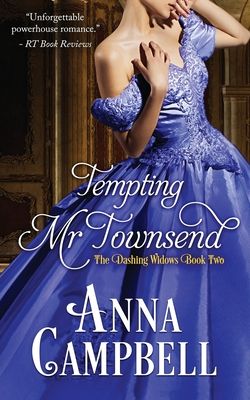
Anna Campbell's Tempting Mr. Townsend, the second installment in the Dashing Widows series, is a captivating tale that artfully intertwines themes of love, loss, and the quest for identity. Set against the backdrop of Regency England, the novel introduces us to two compelling protagonists: Lady Fenella Deerham and Anthony Townsend, a self-made man with a rough exterior but a heart of gold. This story is not just a romance; it is a journey of self-discovery and the breaking down of societal barriers.
The narrative begins with a dramatic encounter that sets the tone for the entire book. Anthony bursts into Fenella's home, demanding the return of his runaway nephew. This initial confrontation is charged with tension and misunderstanding, showcasing Campbell's skill in creating dynamic interactions between characters. Fenella, recently emerged from five years of mourning her husband, is portrayed as both delicate and resilient. Her beauty is not merely skin deep; it conceals a fierce determination and a willingness to defy societal expectations. This duality makes her a relatable and inspiring character.
As the story unfolds, Fenella's character development is particularly noteworthy. She transitions from a grieving widow to a woman of action, willing to risk everything to find her son and his friend. This transformation is not just about her physical journey alongside Anthony; it is also an emotional awakening. Fenella's courage and passion are revealed as she navigates the challenges of their quest, challenging the norms of her time. Campbell deftly explores the theme of female empowerment, illustrating how Fenella's strength lies in her vulnerability and her willingness to embrace her desires.
Anthony Townsend, on the other hand, embodies the archetype of the 'beast' in this Beauty and the Beast narrative. Initially perceived as a rough diamond, his character is layered with complexity. He is a man of wealth and influence, yet he grapples with feelings of inadequacy and the fear that his humble beginnings will forever alienate him from the aristocracy. Campbell paints Anthony as a multifaceted character, whose gruff exterior masks a deep-seated longing for connection and acceptance. His interactions with Fenella reveal his growth, as he learns to embrace his feelings and confront his insecurities.
The chemistry between Fenella and Anthony is palpable, and Campbell masterfully builds their relationship through shared experiences and mutual respect. Their journey to find the missing boys serves as a catalyst for their emotional connection, allowing them to see beyond societal labels and prejudices. The tension between them is electric, and readers will find themselves rooting for their union as they navigate the complexities of love and class.
One of the most striking aspects of Tempting Mr. Townsend is its exploration of societal norms and the constraints placed on individuals based on their social standing. Fenella, as a widow, faces scrutiny and judgment, while Anthony, despite his wealth, is often viewed through the lens of his origins. Campbell challenges these conventions, suggesting that true worth lies not in lineage or wealth, but in character and integrity. This theme resonates deeply, making the story not only a romantic escapade but also a commentary on the nature of love and acceptance.
The pacing of the novel is well-executed, with a balance of tension and tenderness. Campbell's prose is rich and evocative, painting vivid images of Regency England while immersing readers in the emotional landscapes of her characters. The dialogue is sharp and engaging, often laced with wit, which adds depth to the interactions between Fenella and Anthony. The supporting characters, including the runaway boys, serve to enhance the narrative, providing additional layers of conflict and resolution.
In comparison to other works within the genre, such as Julia Quinn's Bridgerton series or Lisa Kleypas's historical romances, Campbell's writing stands out for its emotional depth and character-driven storytelling. While Quinn and Kleypas often focus on the lighter, more humorous aspects of romance, Campbell delves into the complexities of grief, societal expectations, and personal growth. This makes Tempting Mr. Townsend a refreshing addition to the genre, appealing to readers who appreciate a more nuanced exploration of love.
Overall, Tempting Mr. Townsend is a beautifully crafted romance that captivates from the first page to the last. Anna Campbell has created a world where love transcends societal boundaries, and where the journey to self-acceptance is as important as the destination. The novel's themes of resilience, courage, and the transformative power of love resonate long after the final chapter, making it a must-read for fans of historical romance.
In conclusion, if you are looking for a story that combines adventure, emotional depth, and a touch of romance, Tempting Mr. Townsend is a perfect choice. Anna Campbell has once again proven her prowess as a storyteller, delivering a tale that is both enchanting and thought-provoking. This book is sure to leave readers eagerly anticipating the next installment in the Dashing Widows series.



