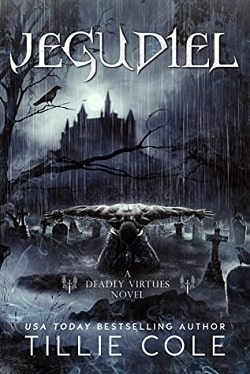
Tillie Cole's Jegudiel (Deadly Virtues 2) plunges readers into a dark and twisted world where the boundaries of morality are blurred, and the line between hero and villain is tantalizingly thin. As a sequel to the first book in the series, it expands on the intricate universe of the Fallen, a brotherhood of murderers who have turned their lethal instincts into a form of vigilante justice. This novel is not just a continuation of the story; it is a deep dive into the psyche of its characters, particularly Diel, whose internal struggles and external conflicts drive the narrative forward.
The blurb sets the stage for a gripping tale of violence, redemption, and the search for identity. Diel, the protagonist, is a man shackled by his past and the physical collar that suppresses his murderous instincts. This collar symbolizes not only his control but also the trauma he has endured at the hands of the Brethren, a sadistic cult that has left indelible scars on his psyche. Cole masterfully illustrates Diel's internal battle, making him a complex character who elicits both sympathy and fear. The reader is drawn into his turmoil, understanding that the monster within him is a product of his horrific experiences.
One of the most compelling aspects of Jegudiel is its exploration of darkness and connection. Diel's encounter with Noa, the second-in-command of the Coven, introduces a powerful dynamic that challenges both characters to confront their inner demons. Noa is not merely a love interest; she is a mirror reflecting Diel's own struggles. Their relationship is built on a shared understanding of pain and rage, creating a bond that transcends the typical romantic trope. Cole's portrayal of their connection is raw and visceral, highlighting how love can flourish in the most unlikely of circumstances.
Thematically, the novel delves into the concepts of control and freedom. Diel's journey is one of seeking liberation from the constraints imposed on him, both physically and emotionally. The electric collar serves as a constant reminder of his past, yet it also becomes a symbol of his desire for autonomy. As he grapples with the urge to unleash his violence, the question arises: can he find freedom without succumbing to the very darkness he seeks to escape? This internal conflict resonates deeply, prompting readers to reflect on their own struggles with control and the consequences of their choices.
Cole does not shy away from depicting the brutal realities of violence and trauma. The graphic nature of the scenes may be unsettling for some, but they serve a purpose in illustrating the harsh world the characters inhabit. The violence is not glorified; rather, it is a necessary element of the narrative that underscores the stakes involved in Diel and Noa's quest for vengeance against the Brethren. The author’s unflinching approach to these sensitive topics adds a layer of authenticity to the story, making it a poignant commentary on the effects of trauma and the quest for justice.
Character development is another strong suit of Jegudiel. Diel evolves from a man defined by his rage to one who begins to understand the power of connection and love. Noa, too, experiences growth as she confronts her own darkness and learns to embrace her true self. Their relationship acts as a catalyst for change, pushing both characters toward a path of healing and self-discovery. Cole’s ability to craft multi-dimensional characters who grapple with their flaws and fears is commendable, making them relatable and engaging.
Comparatively, Jegudiel shares thematic elements with other dark romances, such as those by authors like Penelope Douglas and A. Zavarelli. However, Cole's unique approach lies in her ability to intertwine the psychological aspects of her characters with the visceral nature of their actions. While other authors may focus on the romance or the thrill of the chase, Cole emphasizes the importance of understanding one's past and the impact it has on present choices. This depth sets her work apart in the genre, appealing to readers who seek more than just surface-level entertainment.
In conclusion, Jegudiel (Deadly Virtues 2) is a powerful exploration of love, trauma, and the struggle for identity in a world rife with darkness. Tillie Cole's ability to weave complex characters into a narrative filled with violence and redemption makes this book a compelling read. It challenges readers to confront uncomfortable truths about the nature of humanity and the choices we make in the face of our demons. For those who appreciate dark contemporary romance with a psychological edge, this novel is a must-read. It is a testament to the resilience of the human spirit and the transformative power of love, even in the most dire of circumstances.



