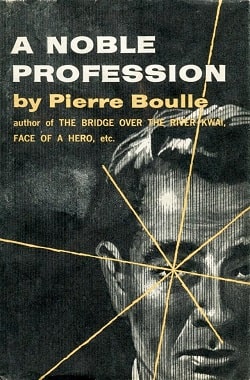
Pierre Boulle's A Noble Profession is a masterful exploration of the complexities of espionage, identity, and the moral ambiguities that accompany the pursuit of honor in a world torn apart by war. Set against the backdrop of World War II, the novel delves deep into the psyche of its protagonist, Cousin, an intellectual author who embodies the contradictions of a man caught between his lofty ideals and the grim realities of his chosen profession.
From the outset, Boulle employs a sharp, incisive narrative style that mirrors the protagonist's own analytical tendencies. Cousin, who prides himself on his objectivity, is a character that many readers may find both compelling and repulsive. He is a man who believes that espionage is a noble pursuit, one that requires the intellect and moral fortitude of an aristocrat. This self-image is central to the novel's exploration of themes such as self-deception and the illusion of superiority. As the story unfolds, it becomes evident that Cousin's perception of himself is not only flawed but also dangerously naive.
Boulle's portrayal of espionage is both thrilling and unsettling. The author does not shy away from depicting the darker aspects of intelligence work, including torture and murder. These elements serve to highlight the moral compromises that individuals must make in the name of duty and honor. The juxtaposition of Cousin's aristocratic ideals with the brutal realities of war creates a tension that permeates the narrative, forcing readers to confront the uncomfortable truth that the line between heroism and villainy is often blurred.
As Cousin navigates the treacherous waters of British Intelligence and the German Secret Service, Boulle introduces a cast of supporting characters that enrich the narrative. Each character serves as a foil to Cousin, reflecting different facets of the human experience during wartime. The interactions between these characters reveal the varying motivations that drive individuals to engage in espionage, from patriotism to revenge. This complexity adds depth to the story, allowing readers to engage with the moral dilemmas faced by each character.
One of the most striking aspects of A Noble Profession is Boulle's ability to weave a tale that is both intellectually stimulating and emotionally resonant. The author’s sardonic wit shines through in his commentary on the absurdities of war and the pretensions of those who believe themselves to be above the fray. This irony is particularly evident in Cousin's journey, as he sacrifices everything for an image of heroism that ultimately proves to be a mirage. Boulle's critique of the romanticized notions of war and heroism is a recurring theme that resonates with readers, particularly in an era where the glorification of conflict often overshadows its devastating consequences.
The character development in A Noble Profession is particularly noteworthy. Cousin's transformation from an idealistic intellectual to a disillusioned spy is both tragic and compelling. As he becomes increasingly embroiled in the machinations of espionage, he is forced to confront the reality of his choices. Boulle skillfully illustrates this internal conflict, allowing readers to witness Cousin's gradual descent into moral ambiguity. The author’s exploration of guilt, betrayal, and the quest for redemption adds layers to Cousin's character, making him a complex and relatable figure.
In comparison to other works that tackle similar themes, such as John le Carré's The Spy Who Came in from the Cold or Graham Greene's The Quiet American, Boulle's narrative stands out for its unique blend of sardonic humor and psychological depth. While le Carré and Greene focus on the geopolitical implications of espionage, Boulle's emphasis on the individual psyche and the personal cost of war offers a fresh perspective. The psychological anatomy of a spy, as Boulle describes it, is not merely a reflection of the external world but also a profound commentary on the human condition.
The impact of A Noble Profession extends beyond its immediate narrative. Boulle's exploration of the themes of honor, sacrifice, and the nature of heroism invites readers to reflect on their own beliefs and values. In a world where the lines between right and wrong are often obscured, the novel serves as a poignant reminder of the complexities of human motivations and the consequences of our actions.
In conclusion, Pierre Boulle's A Noble Profession is a brilliantly crafted novel that delves into the psychological intricacies of espionage and the moral dilemmas faced by those who engage in it. Through the character of Cousin, Boulle offers a sardonic yet insightful critique of the romanticized notions of heroism and the sacrifices made in its name. The novel's rich themes, complex character development, and sharp wit make it a compelling read that resonates long after the final page is turned. For those interested in a thought-provoking exploration of the darker side of human nature, A Noble Profession is a must-read.



