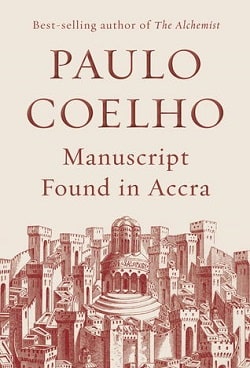
Paulo Coelho's Manuscript Found in Accra is a profound exploration of the human condition, set against the backdrop of a historical moment fraught with tension and uncertainty. The narrative unfolds in Jerusalem on July 14, 1099, as the city braces for an impending invasion by the Crusaders. This setting serves as a poignant metaphor for the internal and external conflicts that define our existence. Coelho, renowned for his philosophical musings and spiritual insights, invites readers to reflect on the nature of fear, anxiety, and the quest for meaning in a world that often feels chaotic.
The story revolves around a mysterious figure known as the Copt, who gathers a diverse group of townspeople to address their fears and anxieties. This gathering becomes a platform for profound dialogue, where individuals from various walks of life pose questions about their struggles, desires, and the essence of success. The Copt's responses are not merely answers but rather reflections that resonate with the universal human experience. He emphasizes that anxiety is an inherent part of life, suggesting that rather than attempting to eradicate it, we must learn to coexist with it, much like we learn to weather storms.
One of the central themes of the book is the duality of existence—the interplay between joy and grief, peace and war. Coelho poignantly captures this dichotomy through the Copt's wisdom, reminding us that life is a tapestry woven with both light and shadow. The Copt states, “Tomorrow, harmony will become discord. Joy will be replaced by grief.” This acknowledgment of life's impermanence and unpredictability is a recurring motif in Coelho's work, echoing the sentiments found in his earlier masterpiece, The Alchemist. Both texts encourage readers to embrace the journey of life, with all its ups and downs, as a means of personal growth and self-discovery.
Character development in Manuscript Found in Accra is subtle yet impactful. The townspeople, each representing different facets of society, embody the collective anxieties and hopes of humanity. Through their questions, Coelho delves into themes of love, loyalty, beauty, and wisdom. The characters are not merely vessels for philosophical discourse; they are reflections of the reader's own struggles and aspirations. This connection fosters a sense of intimacy, allowing readers to see themselves in the questions posed and the answers provided.
Coelho's prose is lyrical and evocative, filled with metaphors that resonate deeply. His writing style is accessible yet profound, making complex ideas digestible for a wide audience. The Copt's teachings are interspersed with poetic reflections, creating a rhythm that draws readers into the narrative. For instance, when discussing success, the Copt asserts, “It is being able to go to bed each night with your soul at peace.” This simple yet powerful definition of success challenges conventional notions of achievement, urging readers to prioritize inner peace over external validation.
The book's structure, resembling a series of meditative reflections rather than a traditional narrative arc, allows for a contemplative reading experience. Each chapter feels like a standalone meditation, inviting readers to pause and reflect on their own lives. This format is reminiscent of works like The Prophet by Kahlil Gibran, where philosophical insights are presented in a poetic and accessible manner. Both authors share a common goal: to inspire readers to seek deeper understanding and connection with themselves and the world around them.
Coelho's exploration of anxiety is particularly relevant in today's fast-paced, often overwhelming world. The Copt's assertion that “anxiety was born in the very same moment as mankind” resonates with contemporary readers who grapple with the pressures of modern life. Coelho encourages us to confront our fears, not as obstacles to be overcome, but as integral parts of our existence. This perspective fosters resilience and acceptance, qualities that are essential for navigating the complexities of life.
Moreover, the book's historical context adds depth to its themes. The impending siege of Jerusalem serves as a metaphor for the battles we face within ourselves. Just as the townspeople confront the uncertainty of their future, readers are prompted to reflect on their own fears and aspirations. Coelho's ability to weave historical events with timeless philosophical questions creates a rich tapestry that transcends time and place.
In conclusion, Manuscript Found in Accra is a thought-provoking work that encourages readers to embrace the complexities of life with courage and grace. Coelho's insights into anxiety, success, and the human experience resonate deeply, offering a comforting reminder that we are not alone in our struggles. The Copt's wisdom serves as a guiding light, illuminating the path toward self-acceptance and inner peace. This book is not just a narrative; it is a philosophical journey that invites readers to reflect on their own lives and the world around them. For those seeking solace and understanding in a tumultuous world, Coelho's latest offering is a treasure trove of wisdom.



