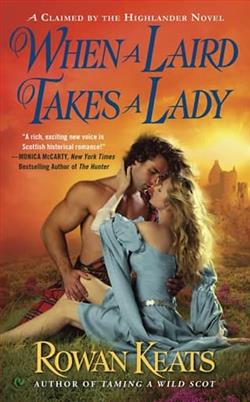
Rowan Keats' novel, When a Laird Takes a Lady, is a captivating journey through the rugged Highlands of Scotland, where the stakes are as high as the mountains themselves. This historical romance weaves a tale of honor, loyalty, and love, set against a backdrop of political intrigue and personal vendettas. Keats crafts a narrative that is both engaging and emotionally resonant, drawing readers into a world where the past and present collide with dramatic intensity.
The novel centers around Isabail Grant, a woman who has been shaped by loss and hardship. Her character is a testament to resilience and determination. Having lost her family, Isabail's quest for justice for her brother's murder is a driving force that propels the narrative forward. Keats skillfully develops Isabail's character, allowing readers to witness her transformation from a woman burdened by grief to one who finds strength in vulnerability. Her journey is both poignant and empowering, making her a compelling protagonist.
Opposite Isabail is Aiden MacCurran, a laird wronged by false accusations. Aiden is a complex character, embodying the archetype of the brooding hero with a heart of gold. His status as an outlaw adds layers to his character, as he navigates the treacherous waters of deceit and betrayal. Keats excels in portraying Aiden's internal struggles, as he grapples with his sense of duty to his clan and his growing feelings for Isabail. The chemistry between Isabail and Aiden is palpable, and their relationship evolves naturally, providing a satisfying romantic arc that is both tender and passionate.
The themes of honor and loyalty are intricately woven throughout the narrative. In the Highlands, these values are more than mere words; they are a way of life. Keats explores how these themes influence the characters' decisions and actions, often placing them in morally ambiguous situations. The tension between personal desires and communal responsibilities adds depth to the story, making it more than just a simple romance. It is a tale of redemption and the quest for truth, where love emerges as the most powerful force of all.
Keats' writing style is both evocative and immersive, capturing the essence of the Scottish Highlands with vivid descriptions and rich detail. Her prose is lyrical, yet accessible, drawing readers into the world she has created. The dialogue is sharp and authentic, reflecting the historical setting while remaining relatable to modern readers. Keats has a knack for pacing, balancing moments of intense action with quieter, introspective scenes that allow for character development and emotional depth.
Emotionally, When a Laird Takes a Lady resonates on multiple levels. The novel explores themes of loss, love, and redemption, evoking a range of emotions from sorrow to joy. Keats handles these themes with sensitivity and nuance, ensuring that the emotional impact is both profound and lasting. The characters' struggles and triumphs feel genuine, making their journey all the more compelling.
In comparison to other works in the historical romance genre, Keats' novel stands out for its intricate plot and well-drawn characters. Fans of authors like Diana Gabaldon and Julie Garwood will find much to appreciate in Keats' attention to historical detail and her ability to craft a gripping narrative. However, Keats brings her unique voice to the genre, offering a fresh perspective that is both engaging and thought-provoking.
Overall, When a Laird Takes a Lady is a richly layered novel that will appeal to fans of historical romance and those who enjoy stories of love overcoming adversity. Rowan Keats has crafted a tale that is as timeless as the Highlands themselves, filled with passion, intrigue, and the enduring power of love. Whether you're drawn to the historical setting, the compelling characters, or the emotional depth, this novel offers something for every reader. It is a testament to the enduring appeal of romance and the transformative power of love.



