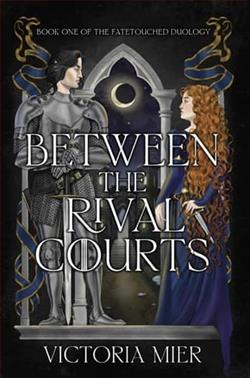
Victoria Mier's "Between the Rival Courts" is an enthralling addition to the realm of Arthurian retellings, weaving a tale that is both familiar and refreshingly new. At its core, this novel is a rich tapestry of medieval fantasy, exploring themes of power, identity, and the complexities of love. Mier's narrative is ambitious, taking readers on a journey through the intricate dynamics of Camelot, where magic and politics intertwine in a dance as old as time.
The story centers on two compelling protagonists: Nyneve Or’Afon, a banished witch with a thirst for knowledge, and Sir Mordred Pendragon, the enigmatic knight of the Round Table. Nyneve's character is a fascinating blend of strength and vulnerability. Her quest to prove herself to the Druid Elders is not just a personal journey but a reflection of her struggle for acceptance and belonging. Mier crafts Nyneve with depth, allowing readers to empathize with her desire to return to her studies and magic, which symbolize her true self.
In contrast, Mordred is portrayed as a complex character, burdened by his dual identity as both a knight and a faerie changeling. His initial suspicion of Nyneve adds tension to their interactions, yet it is this very suspicion that lays the foundation for their evolving relationship. Mordred's internal conflict is palpable, as he grapples with his loyalty to King Arthur and the secret that could unravel his life. Mier skillfully develops Mordred's character, making him more than just the archetypal villain often depicted in Arthurian legends. Instead, he becomes a nuanced figure whose motivations and desires are intricately explored.
The chemistry between Nyneve and Mordred is electric, driven by a blend of mutual suspicion and undeniable attraction. Their relationship is emblematic of the novel's exploration of relentless, unyielding love, a theme that Mier handles with both subtlety and intensity. As their alliance becomes necessary for survival, the emotional stakes are heightened, drawing readers into a narrative that is as much about personal growth as it is about external conflict.
Victoria Mier's writing style is both lyrical and immersive, capturing the grandeur of Camelot while delving into the intimate thoughts and emotions of her characters. Her prose is evocative, painting vivid images of a world where magic is both a gift and a curse. The pacing of the novel is well-balanced, with moments of introspection seamlessly interwoven with action-packed sequences. This dynamic storytelling keeps readers engaged, eager to uncover the next twist in the tale.
Thematically, "Between the Rival Courts" delves into the nature of power and its impact on individuals and society. Mier examines how power can corrupt and isolate, as well as how it can be wielded for both good and ill. The political machinations within King Arthur's court are intricately depicted, highlighting the precarious balance between loyalty and ambition. This exploration of power dynamics is reminiscent of works like "The Guinevere Deception" by Kiersten White, yet Mier's unique voice ensures that her narrative stands out in the crowded field of Arthurian retellings.
Another significant theme is the concept of identity and the masks we wear to navigate the world. Both Nyneve and Mordred are outsiders in their own ways, and their journey is as much about self-discovery as it is about external challenges. Mier's portrayal of their struggles with identity is poignant, inviting readers to reflect on their own experiences of belonging and self-acceptance.
Emotionally, the novel resonates with a depth that is both profound and relatable. Mier's characters are flawed and human, their vulnerabilities laid bare in a way that invites empathy. The emotional impact of the story is heightened by the stakes involved, as war looms and ancient forces threaten to upend the fragile peace of Camelot. The tension between personal desires and greater responsibilities is a recurring motif, adding layers of complexity to the narrative.
In conclusion, "Between the Rival Courts" by Victoria Mier is a captivating medieval fantasy that breathes new life into the Arthurian legend. With its richly developed characters, intricate themes, and evocative writing style, the novel offers a compelling exploration of love, power, and identity. Fans of Arthurian tales and fantasy enthusiasts alike will find much to admire in Mier's ambitious retelling, which stands as a testament to the enduring allure of Camelot and its timeless stories.



