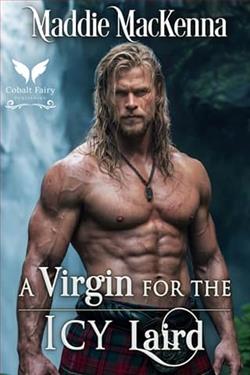
Maddie MacKenna's "A Virgin for the Icy Laird" is a captivating entry into the realm of Scottish Medieval Historical romance, a genre that thrives on the tension between rugged landscapes and the equally rugged hearts of its characters. This novel, with its promise of no cheating, no cliffhangers, and a satisfying happy ending, delivers a story that is as much about personal redemption as it is about romantic fulfillment.
The narrative centers around Laird Adair MacDonnell, a man who has resigned himself to a life devoid of familial warmth following a tragic past. His stoic resolve is challenged by the demands of his council, which necessitates a marriage of convenience. Enter Emily, a quiet and charming knitter with no ties, who seems the perfect candidate for a temporary arrangement. The premise of a fake betrothal is a familiar trope in romance literature, yet MacKenna breathes fresh life into it with her nuanced character portrayals and the palpable chemistry between the protagonists.
Adair MacDonnell is a compelling figure, embodying the archetype of the brooding hero with a heart of gold. His character development is one of the novel's strengths, as MacKenna skillfully peels back the layers of his icy exterior to reveal a man capable of deep affection and vulnerability. The transformation of Adair from a man who "has no use for a wife" to one who is willing to confront his past for love is both believable and emotionally satisfying. This journey is mirrored in Emily, whose initial role as a mere pawn in Adair's plans evolves into that of a partner with agency and strength.
Emily's character is particularly noteworthy for her resilience and adaptability. Having survived a harsh upbringing, she enters the laird's world with a pragmatic outlook, intent on enduring the month-long charade. However, as the story unfolds, Emily's interactions with Adair reveal her capacity for tenderness and courage. Her internal conflict—between the safety of her solitary existence and the allure of a shared future—adds depth to her character and keeps readers invested in her journey.
The themes of redemption and healing are woven throughout the narrative, underscoring the idea that love can be both a refuge and a catalyst for change. MacKenna's writing style is richly descriptive, capturing the austere beauty of the Scottish Highlands and the emotional landscapes of her characters with equal finesse. Her ability to balance steamy romance with heartfelt emotion is reminiscent of authors like Diana Gabaldon, yet MacKenna maintains a distinct voice that is both engaging and evocative.
In terms of emotional impact, "A Virgin for the Icy Laird" excels in creating moments of genuine connection between Adair and Emily. Their relationship is marked by a gradual build-up of tension and intimacy, culminating in scenes that are both passionate and tender. MacKenna's skillful use of dialogue and inner monologue allows readers to experience the characters' evolving emotions firsthand, making their eventual union all the more rewarding.
While the novel adheres to some genre conventions, it distinguishes itself through its exploration of personal growth and the power of love to overcome past traumas. The pacing is well-managed, with a narrative that keeps readers engaged without feeling rushed. The inclusion of historical elements adds authenticity to the setting, enhancing the immersive quality of the story.
In conclusion, Maddie MacKenna's "A Virgin for the Icy Laird" is a standout addition to the Scottish Medieval Historical romance genre. It offers a compelling blend of romance, character development, and emotional depth that will appeal to fans of the genre and newcomers alike. By crafting a story that is both timeless and fresh, MacKenna invites readers to lose themselves in a world where love is as fierce and enduring as the Highland winds. This novel is a testament to the enduring appeal of romance stories that celebrate the transformative power of love and the indomitable spirit of its characters.



