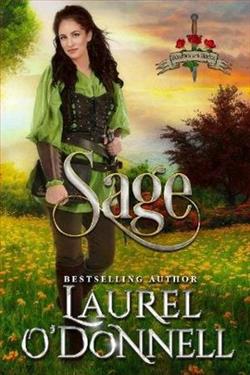
Laurel O'Donnell's novel, Sage, offers a captivating blend of historical romance and mystery, set against the backdrop of a world where the written word holds as much power as the sword. The story centers around Sage Hawke, a young woman who defies the conventions of her time by yearning for knowledge beyond the martial skills her family values. Her journey is both a personal quest for empowerment and a thrilling adventure, as she becomes entangled in the mysteries of a coded book that promises untold secrets.
The central theme of Sage revolves around the pursuit of knowledge and the empowerment it brings. Sage's desire to read and understand the world through books is a powerful statement about the transformative power of literacy, especially in a historical context where women were often denied such opportunities. This theme resonates deeply, drawing parallels to modern discussions about education and empowerment. O'Donnell skillfully weaves this theme into the fabric of the narrative, making it a driving force behind Sage's actions and decisions.
Character development is a strong suit in O'Donnell's writing. Sage is portrayed as a multi-dimensional character, balancing her fierce independence with vulnerability. Her evolution from a woman confined by her family's expectations to one who actively shapes her destiny is both believable and inspiring. Marcus de Nogaret, the male protagonist, provides an intriguing counterpoint to Sage. Initially driven by duty and ambition, his character arc is marked by growth as he learns to value Sage's intellect and courage. Their relationship is a dynamic interplay of tension and mutual respect, which adds depth to the romantic elements of the story.
O'Donnell's writing style is both engaging and evocative, capturing the reader's imagination with vivid descriptions and well-paced action. Her ability to create a sense of urgency and suspense is commendable, particularly in scenes where Sage and Marcus face danger from those who seek the book's secrets. The narrative is peppered with moments of introspection and emotional depth, allowing readers to connect with the characters on a personal level. This balance of action and emotion is reminiscent of the works of authors like Philippa Gregory and Elizabeth Chadwick, who similarly blend historical detail with compelling character-driven stories.
The emotional impact of Sage is significant, as O'Donnell explores themes of love, loyalty, and the courage to defy societal norms. The romance between Sage and Marcus is not just a subplot but a crucial element that underscores the novel's exploration of partnership and equality. Their journey from adversaries to allies, and eventually to lovers, is portrayed with authenticity and sensitivity, making their relationship both believable and heartwarming.
In terms of genre, Sage fits comfortably within historical romance, yet it distinguishes itself with its focus on mystery and intrigue. The coded book serves as a catalyst for the plot, driving the narrative forward and providing a unique twist on the typical romance storyline. This element of mystery is reminiscent of Dan Brown's thrillers, where the unraveling of secrets is central to the plot. However, O'Donnell's focus remains firmly on character development and emotional resonance, ensuring that the mystery enhances rather than overshadows the personal journeys of her protagonists.
Overall, Sage by Laurel O'Donnell is a compelling read that successfully combines elements of romance, mystery, and historical fiction. Its exploration of themes such as empowerment, love, and the quest for knowledge is both timely and timeless, offering readers a story that is as thought-provoking as it is entertaining. The novel's well-drawn characters, engaging plot, and emotional depth make it a standout in the genre, appealing to fans of historical romance and anyone who appreciates a story about the power of the written word.



