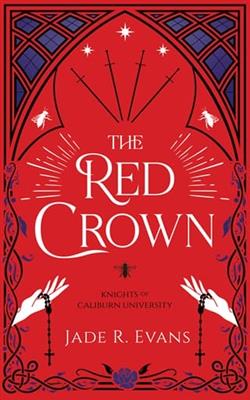
Jade R. Evans' novel, The Red Crown, is a captivating entry into the realm of fantasy fiction, weaving a tale that is both intricate and emotionally resonant. At its core, the book explores themes of identity, loyalty, and the burdens of choice, set against the backdrop of the enigmatic Knights of Caliburn. Evans crafts a narrative that is rich with tension and mystery, drawing readers into a world where ancient powers and personal dilemmas collide.
The story revolves around the protagonist, who finds herself entangled in the complex web of the Knights of Caliburn, an ancient order with a sacred mission that has been twisted beyond recognition. The blurb hints at a fractured group of protectors, each grappling with their own internal and external conflicts. Kingston, Kai, Lanz, and Callahan are not just her protectors; they are deeply flawed individuals whose struggles add depth to the narrative. Evans skillfully delves into their psyches, revealing the weight of their choices and the impact these have on their relationships and the protagonist's journey.
Character development is a standout feature of The Red Crown. Kingston's internal conflict is palpable as he grapples with the consequences of his decisions. His character arc is a testament to Evans' ability to portray the complexity of human emotions and the struggle between duty and personal desire. Kai's storyline, marked by his dangerous game with formidable adversaries, adds an element of suspense and unpredictability. Lanz's fading presence introduces a sense of urgency and fear, while Callahan's steadfast loyalty is tested in ways that could potentially fracture the group. Each character is meticulously crafted, their development integral to the unfolding drama.
Evans' writing style is both evocative and immersive, drawing readers into the atmospheric setting of Caliburn's campus. Her prose is laced with a lyrical quality that enhances the mystical elements of the story. The narrative is punctuated by moments of introspection and revelation, allowing readers to connect deeply with the protagonist's journey. The author's ability to balance action with introspection is reminiscent of the works of fantasy authors like Sarah J. Maas and Leigh Bardugo, where character-driven plots are interwoven with rich, fantastical worlds.
The emotional impact of The Red Crown is profound, as Evans explores the protagonist's quest for identity and self-acceptance. The central question, "Who do you think you are?" resonates throughout the novel, challenging both the protagonist and the reader to confront the masks we wear and the truths we hide. This theme of self-discovery is universal, making the protagonist's journey relatable and compelling. The narrative's emotional depth is further enhanced by the stakes involved—personal, moral, and existential—creating a sense of urgency that propels the story forward.
Evans also deftly incorporates elements of myth and legend, with references to a "lady in the lake" and riddles that evoke the timeless allure of Arthurian legends. These elements add layers to the narrative, inviting readers to explore the interplay between myth and reality. The presence of older powers stirring within the story serves as a metaphor for the protagonist's awakening, as she confronts her past and embraces her destiny. This blend of mythological and personal themes is reminiscent of the works of Neil Gaiman, where the fantastical is seamlessly woven into the fabric of everyday life.
In conclusion, The Red Crown by Jade R. Evans is a masterful exploration of identity, loyalty, and the complexities of choice within a richly imagined fantasy world. The novel's compelling characters, evocative writing style, and emotional resonance make it a standout in the genre. Fans of character-driven fantasy with a touch of myth and mystery will find much to admire in Evans' work. As the protagonist faces fire and reckoning, readers are left to ponder their own answers to the question of identity, making The Red Crown not just a story, but an invitation to introspection and discovery.



