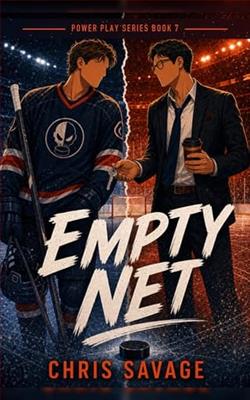
Chris Savage's Empty Net is a compelling entry in the MM hockey romance genre, offering a nuanced exploration of identity, vulnerability, and the inevitable passage of time. As the seventh book in the Power Play series, it stands alone while maintaining connections to its predecessors, ensuring that both new readers and series veterans find something to appreciate. The novel centers on Nolan Cray, a veteran defenseman for the Atlanta Reapers, and Caleb Wren, the team's new assistant general manager. Their relationship unfolds against the backdrop of professional sports, where personal and professional boundaries blur, creating a rich tapestry of tension and desire.
At the heart of Empty Net is the theme of control. Nolan Cray's life is meticulously managed, from his on-ice performance to his personal habits. This control is a shield, protecting him from the vulnerabilities that come with aging and the physical demands of professional hockey. His hip, a symbol of his declining physical prowess, serves as a poignant reminder of the limited time he has left in the sport he loves. Savage deftly captures the internal struggle of an athlete facing the twilight of his career, a theme that resonates with authenticity and emotional depth.
Caleb Wren, on the other hand, embodies precision and professionalism. His role as an evaluator is to remain objective, yet his growing attraction to Nolan challenges this detachment. The conflict between his professional duties and personal desires adds a layer of complexity to his character, making him relatable and human. The moment Caleb discloses his conflict of interest, sacrificing his professional advantage for honesty, marks a turning point in the narrative. This act of vulnerability sets the stage for a relationship built on trust and mutual respect, a refreshing departure from the often trope-laden dynamics in romance novels.
The writing style in Empty Net is both evocative and accessible. Chris Savage employs a narrative voice that is intimate yet unpretentious, drawing readers into the emotional lives of the characters. The dialogue is crisp and realistic, capturing the nuances of professional sports culture while also delving into the personal stakes at play. The chemistry between Nolan and Caleb is palpable, with moments of tension and tenderness that are beautifully rendered. Savage's ability to balance the heat of their romance with the emotional weight of their individual journeys is a testament to her skill as a storyteller.
Emotionally, Empty Net is a rollercoaster. The novel tackles themes of identity and self-acceptance with sensitivity and grace. Nolan's journey from a closeted athlete to someone willing to embrace his true self is both inspiring and heart-wrenching. The locker room environment, often portrayed as hyper-masculine and unwelcoming, is instead depicted as a space of camaraderie and acceptance. This portrayal challenges stereotypes and offers a hopeful vision of inclusivity in sports, a theme that is both timely and significant.
Comparatively, Empty Net shares thematic similarities with works like Sarina Bowen's Him series, which also explores the intersection of sports and romance. However, Savage's novel distinguishes itself through its focus on the later stages of an athlete's career, a perspective less frequently explored in the genre. This focus on aging and the fear of obsolescence adds a layer of poignancy to the narrative, resonating with readers who have faced similar life transitions.
In conclusion, Empty Net by Chris Savage is a standout in the MM hockey romance genre, offering a rich exploration of love, identity, and the passage of time. Its well-drawn characters, engaging writing style, and emotional depth make it a must-read for fans of sports romance and those seeking stories that challenge conventional narratives. The novel's balance of heat and heart ensures that readers are both entertained and moved, making it a worthy addition to any romance enthusiast's bookshelf.



