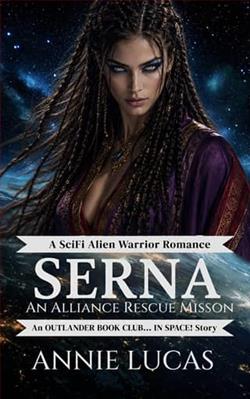
Annie Lucas's novel, Serna, is a captivating blend of science fiction and romance, set against the backdrop of interstellar politics and personal sacrifice. The narrative follows Serna, the Alliance Prime, as she navigates the complexities of leadership and personal desire. Lucas crafts a story that not only delves into the intricacies of duty and love but also explores the profound impact of vulnerability and connection.
At the heart of Serna is the titular character's journey from an unyielding leader to a woman rediscovering her own desires. For a century, Serna has been the epitome of strength and control, a leader who has sacrificed personal happiness for the greater good. Her return to her homeworld for her estranged mate’s funeral sets the stage for a confrontation with her past and her emotions. Lucas skillfully portrays Serna's internal struggle, making her a deeply relatable character despite her otherworldly status. The author’s ability to convey Serna’s transformation is reminiscent of the character depth found in works by authors like Lois McMaster Bujold and Ann Leckie, who similarly explore the balance between duty and personal longing in their science fiction narratives.
The introduction of Cullen, the human soldier, adds a compelling dynamic to the story. His tactical brilliance and unwavering loyalty have earned Serna's respect, but it is the unexpected and intense attraction between them that drives much of the novel's emotional tension. Cullen is a character who, like Serna, is defined by his duty. Yet, his interactions with Serna reveal layers of vulnerability and desire that he has long suppressed. Lucas’s portrayal of Cullen is nuanced, offering readers a character who is both a formidable strategist and a man grappling with his own grief and longing. The chemistry between Serna and Cullen is palpable, and Lucas captures the intensity of their connection with a deft hand, reminiscent of the romantic tension found in the works of Nalini Singh and Ilona Andrews.
The writing style in Serna is both evocative and immersive. Lucas uses vivid descriptions to bring the alien settings to life, from the ceremonial halls of Serna’s homeworld to the lush, dangerous jungles of the uncharted planet where much of the action unfolds. The author’s attention to detail enhances the world-building, creating a universe that feels both expansive and intimately connected to the characters’ journeys. The prose is lyrical yet precise, a balance that allows the emotional beats of the story to resonate deeply with the reader.
A major theme in Serna is the tension between duty and personal desire. Serna’s role as the Alliance Prime demands unwavering dedication, a theme that resonates with readers familiar with the burdens of leadership and responsibility. Her struggle to reconcile her public persona with her private desires is a universal conflict that Lucas explores with sensitivity and insight. The novel also examines the idea of vulnerability as a strength, challenging the notion that leaders must be infallible and emotionally distant. Through Serna and Cullen’s relationship, Lucas suggests that true strength lies in the ability to open oneself to love and connection, even when it poses a risk to everything one has built.
The emotional impact of Serna is profound, as Lucas masterfully balances the high stakes of interstellar conflict with the intimate stakes of personal relationships. The novel’s tension is not only derived from the external threats that Serna and Cullen face but also from their internal battles with fear, grief, and longing. As the narrative unfolds, readers are drawn into a world where love is both a source of strength and a potential vulnerability. This duality is what makes the novel so compelling, as it challenges characters and readers alike to consider what they are willing to risk for the chance at true connection.
In conclusion, Serna by Annie Lucas is a remarkable addition to the science fiction romance genre. With its richly developed characters, intricate world-building, and exploration of universal themes, the novel offers a deeply engaging reading experience. Fans of authors like Lois McMaster Bujold and Nalini Singh will find much to appreciate in Lucas’s work, as it combines the best elements of speculative fiction and romance. Serna is a story that lingers long after the final page, inviting readers to reflect on the nature of duty, love, and the courage it takes to embrace both.



