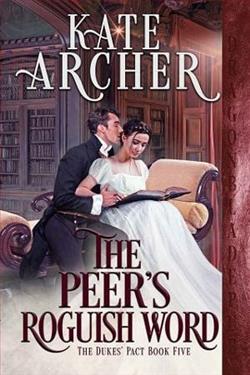
Kate Archer's novel, The Peer's Roguish Word, is a delightful foray into the Regency romance genre, where intellect meets charm in a dance of wit and intrigue. Set against the backdrop of London's high society, the novel weaves a tale that is both engaging and thought-provoking, capturing the essence of a time when societal expectations often clashed with personal aspirations.
The story centers around Kitty Dell, an intellectual young woman who finds herself thrust into the social whirl of London's launch season. Kitty is a refreshing protagonist, characterized by her sharp mind and scientific curiosity. Archer crafts her as a beacon of intelligence in a world that often undervalues such traits in women, making her a compelling character for modern readers. Her journey is not just one of romantic discovery but also of self-affirmation, as she navigates the complexities of societal norms while staying true to her passions.
In contrast, Giles Dermot, the Marquess of Grayson, is the quintessential Regency gentleman with a twist. Known for his dandyish demeanor and flirtatious nature, Giles initially appears to be the antithesis of Kitty's scholarly world. However, Archer skillfully peels back the layers of his character, revealing a man who, despite his cavalier exterior, harbors a deep appreciation for art and literature. His character development is one of the novel's highlights, as he evolves from a mere charmer to someone who genuinely values Kitty's intellect and aspirations.
The chemistry between Kitty and Giles is palpable, and Archer's writing style enhances their dynamic. Her prose is elegant yet accessible, capturing the nuances of Regency dialogue with a modern flair. The banter between the protagonists is both witty and endearing, reminiscent of the repartee found in Jane Austen's works. This interplay not only drives the romantic plot but also underscores the novel's exploration of gender roles and societal expectations.
One of the major themes in The Peer's Roguish Word is the tension between societal duty and personal desire. Kitty's internal struggle with her role as a debutante versus her identity as a scientist mirrors the broader societal constraints placed on women during the Regency era. Archer deftly explores this theme, highlighting the courage it takes for individuals to defy convention and pursue their passions. This theme is further enriched by the subplot involving the Royal Society, which adds an element of mystery and intrigue to the narrative.
The mystery surrounding the Royal Society serves as a clever plot device that brings Kitty and Giles together, allowing their relationship to develop organically amidst the unfolding drama. Archer's handling of this subplot is reminiscent of Georgette Heyer's Regency novels, where romance and mystery often intertwine to create a captivating narrative. The intrigue not only propels the plot forward but also provides a platform for Kitty to demonstrate her intellectual prowess, further endearing her to readers.
Emotionally, the novel resonates on multiple levels. Archer captures the excitement and trepidation of first love, the thrill of intellectual discovery, and the satisfaction of personal growth. The emotional depth of the characters is matched by the vivid depiction of Regency London, with its opulent balls and clandestine meetings, creating a rich tapestry that immerses the reader in the era.
Comparatively, The Peer's Roguish Word stands alongside works by authors like Julia Quinn and Mary Balogh, who are known for their ability to blend romance with historical authenticity. Archer's novel, however, distinguishes itself with its emphasis on intellectual themes and its strong, independent heroine, making it a standout in the genre.
In conclusion, The Peer's Roguish Word by Kate Archer is a charming and insightful addition to the Regency romance genre. Its well-drawn characters, engaging plot, and exploration of timeless themes make it a must-read for fans of historical romance. Archer's ability to balance romance, mystery, and social commentary ensures that the novel is not only entertaining but also thought-provoking, leaving readers with much to ponder long after the final page is turned.



