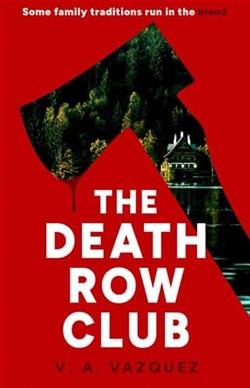
V.A. Vazquez's The Death Row Club is a gripping psychological thriller that delves into the dark recesses of familial legacy and the haunting shadows of past sins. The novel's premise is both chilling and intriguing, inviting readers into a world where the children of serial killers gather, united by their shared, macabre heritage. This unique setup immediately sets the stage for a narrative that is as much about the characters' internal struggles as it is about the external mystery that unfolds.
At the heart of the story is Nicola Fischer, a protagonist whose life has been upended by her father's heinous crimes. The book opens with Nicola grappling with the fallout from her father's arrest, a scenario that is both public and deeply personal. Vazquez skillfully portrays Nicola's isolation and desperation, painting a vivid picture of a woman who is both a victim and a survivor. Her journey is one of self-discovery and redemption, as she navigates the treacherous waters of guilt by association and societal judgment.
The invitation to the Death Row Club serves as a catalyst for Nicola's transformation. The club, founded by Greer Woods, a fellow child of a serial killer and a former friend, is a sanctuary of sorts, offering a semblance of understanding and camaraderie. However, the retreat quickly becomes a crucible of suspicion and fear when a new participant arrives, claiming her own dark lineage. Vazquez expertly builds tension, using the claustrophobic setting to heighten the sense of unease and mistrust among the characters.
Character development is a standout feature of The Death Row Club. Nicola is a well-rounded and relatable protagonist, whose vulnerability and strength are portrayed with nuance. Her interactions with other club members reveal layers of complexity, as each character grapples with their own demons. Greer, in particular, is a fascinating foil to Nicola, embodying both the allure and danger of unresolved trauma. The dynamics between the characters are intricate and compelling, driving the narrative forward with a palpable sense of urgency.
Vazquez's writing style is both evocative and precise, capturing the psychological depth of her characters while maintaining a brisk, suspenseful pace. The prose is laced with a dark elegance, reflecting the novel's themes of identity, legacy, and the nature of evil. The author deftly balances introspective moments with action, ensuring that the plot remains engaging and unpredictable. The dialogue is sharp and realistic, adding authenticity to the characters' interactions and enhancing the overall tension.
The emotional impact of The Death Row Club is profound, as it explores the enduring effects of familial ties and the struggle for self-definition. Nicola's journey is one of empowerment, as she confronts the specter of her father's crimes and seeks to forge her own path. The novel raises thought-provoking questions about nature versus nurture, and whether the sins of the father inevitably taint the child. These themes resonate deeply, inviting readers to reflect on their own perceptions of identity and morality.
In comparison to other works in the psychological thriller genre, The Death Row Club stands out for its originality and depth. Fans of Gillian Flynn's Sharp Objects or Tana French's Dublin Murder Squad series will appreciate Vazquez's ability to weave complex characters with a suspenseful plot. The novel's exploration of dark family secrets and the quest for truth is reminiscent of these authors' works, yet Vazquez brings her own distinctive voice and perspective to the genre.
Overall, V.A. Vazquez has crafted a masterful thriller that is both thought-provoking and entertaining. The Death Row Club is a testament to the author's skill in creating a narrative that is as emotionally resonant as it is suspenseful. It is a must-read for fans of psychological thrillers, offering a fresh take on the genre with its unique premise and richly developed characters. As the story unfolds, readers will find themselves questioning the nature of evil and the possibility of redemption, making this novel a compelling addition to any bookshelf.



