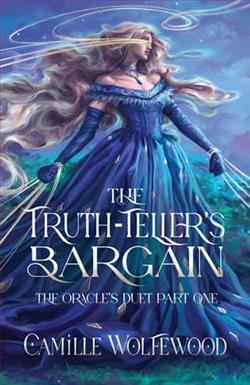
Camille Wolfewood's The Truth-Teller's Bargain is a compelling fantasy novel that deftly explores themes of power, freedom, and the intricate dance between destiny and choice. Set against the backdrop of a richly imagined kingdom, the story follows Alethea, an Oracle whose gift of truth-telling has been both her curse and her cage. From the outset, Wolfewood crafts a narrative that is both engaging and thought-provoking, drawing readers into a world where truth is a weapon and freedom is the ultimate prize.
At the heart of the novel is Alethea, a character whose development is both profound and relatable. Born into a life of servitude under her mother's tyrannical rule, Alethea's journey is one of self-discovery and empowerment. Her gift of prophecy, while seemingly a tool for others, becomes a catalyst for her own liberation. Wolfewood skillfully portrays Alethea's internal struggle as she grapples with the weight of her gift and the desire for autonomy. This character arc is reminiscent of other strong female protagonists in fantasy literature, such as those found in Tamora Pierce's Song of the Lioness series, where young women must navigate the complexities of power and identity.
Opposite Alethea stands Nakir Hasan, the exiled heir and leader of the rebellion. His character is a study in contrasts, embodying both strength and vulnerability. Nakir's refusal to kneel, both literally and metaphorically, sets him apart as a leader who values integrity over power. The dynamic between Alethea and Nakir is one of the novel's most compelling elements, as their initial distrust evolves into a partnership forged by necessity and mutual respect. This relationship is reminiscent of the nuanced character interactions found in Leigh Bardugo's Six of Crows, where alliances are as fragile as they are essential.
Wolfewood's writing style is both lyrical and precise, capturing the grandeur of the fantasy genre while maintaining a focus on character-driven storytelling. Her prose is imbued with a sense of urgency, reflecting the high stakes of Alethea and Nakir's journey. The author's ability to weave intricate details into the narrative enhances the world-building, creating a vivid tapestry that draws readers into the kingdom of Lenorea. This attention to detail is comparable to the immersive worlds crafted by authors like Robin Hobb and Sarah J. Maas, where the setting becomes a character in its own right.
One of the major themes explored in The Truth-Teller's Bargain is the concept of freedom and its inherent cost. Alethea's quest for liberation is fraught with challenges, both external and internal. The novel raises poignant questions about the price of freedom and the sacrifices required to achieve it. As Alethea and Nakir navigate the complexities of their bargain, the narrative delves into the moral ambiguities of their choices. This exploration of ethical dilemmas is reminiscent of the works of Ursula K. Le Guin, where characters must confront the consequences of their actions in a world where right and wrong are not always clear-cut.
The emotional impact of The Truth-Teller's Bargain is profound, as Wolfewood masterfully balances moments of tension with those of introspection. The novel's climax is both thrilling and heart-wrenching, leaving readers to ponder the implications of prophecy and choice. The emotional resonance of the story is heightened by the depth of its characters, whose struggles and triumphs are portrayed with authenticity and nuance. This emotional depth is akin to the works of authors like Kristin Cashore, where character-driven narratives evoke a powerful response from readers.
In conclusion, Camille Wolfewood's The Truth-Teller's Bargain is a standout addition to the fantasy genre, offering a fresh perspective on themes of power, freedom, and destiny. With its richly developed characters, intricate world-building, and thought-provoking narrative, the novel is sure to captivate fans of fantasy literature. Wolfewood's ability to blend lyrical prose with compelling storytelling makes this book a must-read for those seeking a tale that is both epic in scope and intimate in its exploration of the human condition. As Alethea and Nakir's journey unfolds, readers are left to contemplate the true nature of freedom and the choices that define us.



