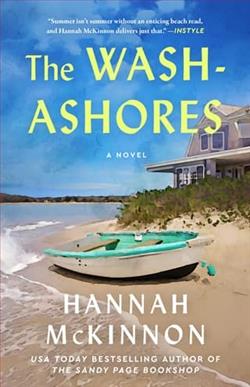
Hannah McKinnon's novel, The Wash-Ashores, is a delightful exploration of family, legacy, and the relentless pursuit of personal dreams set against the picturesque backdrop of Cape Cod. This summery tale weaves together themes of homecoming, self-discovery, and the intricate dynamics of familial relationships, all encapsulated within the charming yet weathered walls of the Cranberry Inn.
At the heart of the story is Holly, a thirty-year-old woman who finds herself at a crossroads when she inherits the Cranberry Inn from her grandmother, Francine. The twist, however, is that Francine is still very much alive and skeptical about Holly's ability to manage the inn. This setup creates a compelling narrative tension as Holly embarks on a journey to prove herself capable of preserving the inn's storied history while navigating the challenges of modern-day business.
McKinnon skillfully develops Holly's character, portraying her as a determined and resourceful protagonist. Holly's evolution throughout the novel is both relatable and inspiring. She embodies the struggle many face when balancing personal aspirations with familial expectations. Her determination to succeed in hosting the Suttons' high-profile wedding, despite the odds stacked against her, serves as a testament to her resilience and ingenuity.
The relationship between Holly and Francine is central to the novel's emotional core. Francine's reluctance to fully relinquish control of the inn adds a layer of complexity to their interactions. McKinnon deftly explores themes of generational conflict and the fear of letting go, which are universal and resonate deeply with readers. The dynamic between the two women is reminiscent of the nuanced relationships found in works by authors like Elin Hilderbrand, who similarly captures the essence of family ties in coastal settings.
Adding to the narrative's richness is the reappearance of Ben, Holly's childhood friend and former love interest. Ben's return to Cape Cod and his venture into oyster farming introduces a subplot that intertwines seamlessly with Holly's story. The unresolved tension between Holly and Ben provides an emotional undercurrent that enhances the novel's romantic elements without overshadowing its primary focus on family and self-discovery.
McKinnon's writing style is both engaging and evocative, painting vivid pictures of Cape Cod's scenic beauty and the quaint charm of the Cranberry Inn. Her descriptive prose invites readers to immerse themselves in the setting, making it easy to visualize the inn's Victorian architecture and the idyllic coastal landscape. This attention to detail enriches the reading experience, drawing comparisons to the atmospheric storytelling of authors like Mary Alice Monroe.
The novel's pacing is well-balanced, allowing for a gradual unfolding of events that keeps readers invested in Holly's journey. McKinnon expertly weaves together multiple plot threads, ensuring that each character's arc is given the attention it deserves. The interplay between the personal and professional challenges Holly faces creates a narrative that is both compelling and relatable.
Emotionally, The Wash-Ashores resonates with readers through its exploration of themes such as identity, belonging, and the courage to embrace change. Holly's struggle to find her place within the legacy of the Cranberry Inn mirrors the universal quest for self-acceptance and fulfillment. The novel's conclusion, while satisfying, leaves room for reflection on the importance of family and the enduring bonds that shape our lives.
In conclusion, Hannah McKinnon's The Wash-Ashores is a captivating addition to the genre of contemporary women's fiction. Its blend of heartfelt storytelling, well-drawn characters, and evocative setting makes it a perfect read for those who enjoy stories of personal growth and family dynamics. With its relatable themes and engaging narrative, the novel stands alongside works by authors like Kristin Hannah and Nancy Thayer, offering readers a poignant and uplifting literary escape.



