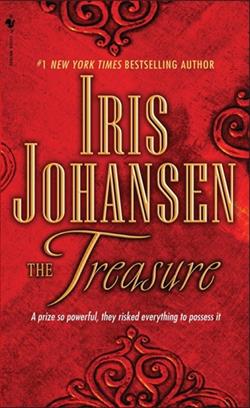
Iris Johansen's novel, The Treasure, is a captivating blend of historical romance and adventure, weaving a tale that is both thrilling and emotionally resonant. Set against the backdrop of medieval Scotland and the exotic allure of the Middle East, the story follows Lady Selene Ware and Kadar Ben Arnaud on a perilous quest that tests their courage, loyalty, and love. Johansen, known for her ability to craft intricate plots and dynamic characters, does not disappoint in this gripping narrative.
The novel opens with a dramatic escape, as Selene, a former harem slave, is liberated by Kadar, a man with a shadowy past as an assassin. This initial setup immediately hooks the reader, promising a story filled with danger and intrigue. Johansen skillfully uses this premise to explore themes of freedom and redemption. Selene's journey from captivity to self-determination is a powerful narrative arc that underscores the novel's exploration of personal agency and resilience.
Kadar, on the other hand, is a complex character whose transformation is equally compelling. Trained in the dark arts of death and seduction, he is a man haunted by his past. Johansen deftly navigates his internal struggle, portraying a character torn between his former life and his burgeoning feelings for Selene. This internal conflict adds depth to his character and provides a rich ground for exploring themes of redemption and love. The chemistry between Selene and Kadar is palpable, and their evolving relationship is one of the novel's most engaging aspects.
Johansen's writing style in The Treasure is both evocative and immersive. Her descriptive prose brings to life the contrasting settings of the novel, from the opulent yet oppressive atmosphere of the harem to the rugged beauty of the Scottish landscape. This vivid imagery not only enhances the narrative but also serves to underscore the novel's thematic concerns. The juxtaposition of these settings highlights the characters' internal and external struggles, creating a rich tapestry that is both visually and emotionally engaging.
One of the novel's standout features is its exploration of the quest for a legendary religious relic. This element of the plot introduces a layer of historical intrigue that adds depth to the narrative. Johansen weaves historical elements seamlessly into the story, creating a sense of authenticity that enhances the reader's immersion. The quest serves as a catalyst for the characters' development, forcing them to confront their fears and desires. It also raises questions about the nature of power and the lengths individuals will go to obtain it, a theme that resonates throughout the novel.
Emotionally, The Treasure is a rollercoaster. Johansen expertly balances moments of tension and suspense with scenes of tenderness and introspection. The stakes are high, and the reader is constantly kept on edge, wondering what will happen next. This emotional intensity is one of the novel's greatest strengths, as it keeps the reader invested in the characters' journeys and the outcome of their quest.
In comparison to other works in the historical romance genre, Johansen's novel stands out for its intricate plot and well-developed characters. Fans of authors like Diana Gabaldon and Philippa Gregory will likely appreciate Johansen's attention to historical detail and her ability to craft a compelling narrative. However, Johansen's focus on the psychological depth of her characters and the moral complexities they face sets her work apart, offering a fresh take on familiar themes.
Overall, The Treasure by Iris Johansen is a masterfully crafted novel that combines elements of romance, adventure, and historical intrigue. Its well-drawn characters, engaging plot, and emotional depth make it a standout in the genre. Johansen's ability to weave together these elements into a cohesive and compelling narrative is a testament to her skill as a storyteller. For readers seeking a novel that is both entertaining and thought-provoking, The Treasure is a treasure indeed.



