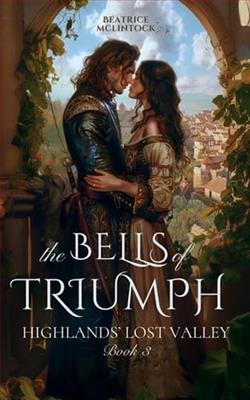
Beatrice McLintock's "The Bells of Triumph" is a captivating Highland romance that seamlessly blends elements of historical fiction, romance, and action. The novel immerses readers in a world where the past and future collide, and where the stakes are as high as the mountains of the Scottish Highlands. Through the eyes of Flora Kerr, McLintock crafts a narrative that is both intimate and epic, exploring themes of love, loyalty, and the relentless pursuit of freedom.
At the heart of "The Bells of Triumph" is the character of Flora Kerr, an orphan turned rebel, whose journey is as compelling as it is transformative. Flora is not just a passive participant in the unfolding drama; she is a force to be reckoned with. Her evolution from a woman defined by her circumstances to one who defines her destiny is a testament to McLintock's skillful character development. Flora's vow to protect Seamus, the rightful king and her husband, is both a personal and political commitment, highlighting her dual role as both a lover and a warrior.
McLintock's portrayal of Flora is nuanced and layered, allowing readers to connect deeply with her struggles and triumphs. Flora's internal conflict—her fear of losing Seamus and her determination to see her clan triumph—adds emotional depth to the narrative. This complexity is reminiscent of the character-driven storytelling found in Diana Gabaldon's "Outlander" series, where personal and political stakes are intricately intertwined.
The writing style in "The Bells of Triumph" is both lyrical and vivid, capturing the rugged beauty of the Highlands and the intensity of the characters' emotions. McLintock's prose is rich with imagery, painting a picture of a land scarred by tyranny yet brimming with hope. The author's ability to evoke the setting is matched by her talent for crafting dialogue that feels authentic and true to the period. This attention to detail enhances the historical authenticity of the novel, drawing readers into a world that feels both distant and familiar.
One of the major themes explored in the novel is the idea of sacrifice. Seamus's willingness to lay down his life for the cause is a recurring motif, underscoring the heavy burden of leadership. The phrase "the head that wears the crown is heavy" encapsulates the tension between personal desires and the demands of leadership. Flora's promise to be Seamus's shadow, shield, and arrow speaks to the power of love as a motivating force, driving her to become more than she ever imagined.
The emotional impact of "The Bells of Triumph" is profound, as McLintock deftly balances moments of tenderness with scenes of intense action. The romance between Flora and Seamus is both passionate and poignant, providing a counterpoint to the brutality of the conflict. Their relationship is a beacon of hope amidst the chaos, illustrating the resilience of the human spirit. This emotional resonance is a hallmark of the Highland romance genre, where love often serves as a catalyst for change and redemption.
In comparison to other works in the genre, "The Bells of Triumph" stands out for its strong female protagonist and its emphasis on the collective struggle for freedom. While many Highland romances focus primarily on the romantic relationship, McLintock broadens the scope to include themes of community and resistance. This broader perspective enriches the narrative, offering readers a more comprehensive view of the characters' world and the forces that shape their lives.
Overall, "The Bells of Triumph" by Beatrice McLintock is a compelling addition to the Highland romance genre. Its blend of romance, action, and historical detail will appeal to fans of authors like Diana Gabaldon and Julie Garwood. McLintock's ability to weave a tale that is both personal and epic ensures that readers will be captivated from the first page to the last. For those seeking a story of love, courage, and triumph against all odds, "The Bells of Triumph" is a must-read.



