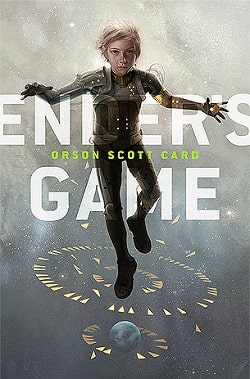
Ender's Game, the first book in Orson Scott Card's acclaimed Ender's Saga, is a profound exploration of the complexities of war, leadership, and the moral dilemmas faced by a child prodigy thrust into the harsh realities of military training. Set in a future where Earth is under threat from an alien species known as the Buggers, the novel follows the journey of Andrew "Ender" Wiggin, a six-year-old boy selected for a rigorous training program designed to cultivate the perfect military leader.
From the outset, Card immerses readers in a world where the stakes are incredibly high. Ender is not merely a child playing games; he is a pawn in a larger strategy, manipulated by the military to become the ultimate weapon against an alien foe. This premise raises critical questions about the ethics of using children in warfare and the psychological toll of such an upbringing. As Ender navigates the brutal environment of Battle School, he is subjected to increasingly harsh training regimens that test his intellect, emotional resilience, and moral compass.
One of the most striking themes in Ender's Game is the concept of isolation and its impact on personal development. Ender is often alone, both physically and emotionally, as he grapples with the expectations placed upon him. His isolation is compounded by the manipulative tactics employed by his superiors, who pit him against his peers to foster competition and drive him to excel. This theme resonates deeply, as it reflects the struggles many individuals face when they are thrust into roles that demand extraordinary performance at the expense of their well-being.
Character development is another area where Card excels. Ender is a richly drawn character whose evolution throughout the story is both compelling and heartbreaking. As he rises through the ranks of Battle School, he grapples with the burden of leadership and the moral implications of his actions. His innate empathy, which sets him apart from his peers, becomes both a strength and a vulnerability. The internal conflict he experiences—balancing the need to win with the desire to maintain his humanity—creates a poignant narrative that challenges readers to consider the cost of victory.
Ender's siblings, Peter and Valentine, serve as crucial foils to his character. Peter's ruthless ambition and violent tendencies contrast sharply with Valentine's nurturing nature and intellectual prowess. Their parallel narratives, conducted through anonymous online personas, add depth to the story and highlight the varying paths individuals can take when faced with the same circumstances. Peter's desire for power and control, juxtaposed with Valentine's more compassionate approach, underscores the theme of manipulation and the different forms of influence that can shape society.
Card's exploration of leadership is particularly noteworthy. Ender is portrayed as a reluctant leader, one who is acutely aware of the moral implications of his decisions. His journey raises questions about what it means to be a leader in times of crisis. Is it merely about winning, or is it also about understanding and compassion? This nuanced portrayal of leadership is a refreshing departure from the archetypal "hero" narrative often found in science fiction, making Ender a more relatable and complex character.
The novel also delves into the nature of conflict and the consequences of war. Through Ender's experiences, readers are forced to confront the harsh realities of combat and the toll it takes on individuals and societies. The climactic twist of the story, which reveals the true nature of Ender's final simulation, serves as a powerful commentary on the dehumanizing aspects of warfare and the moral ambiguities that accompany it. This revelation not only challenges Ender's understanding of his actions but also compels readers to reflect on the broader implications of their own choices in the face of conflict.
In terms of writing style, Card's prose is accessible yet thought-provoking. He skillfully balances action with introspection, allowing readers to engage with both the plot and the deeper themes at play. The pacing is well-structured, with tension building steadily as Ender faces increasingly difficult challenges. Card's ability to create vivid imagery and emotional resonance ensures that readers remain invested in Ender's journey from start to finish.
Comparatively, Ender's Game shares thematic similarities with other works of science fiction that explore the ethics of war and the complexities of leadership. For instance, works like Robert A. Heinlein's Starship Troopers and H.G. Wells' The War of the Worlds also grapple with the moral implications of conflict and the responsibilities of those in power. However, what sets Card's narrative apart is its focus on the psychological and emotional dimensions of its young protagonist, making it a unique contribution to the genre.
In conclusion, Ender's Game is a masterfully crafted novel that transcends the boundaries of traditional science fiction. Through its exploration of themes such as isolation, leadership, and the moral complexities of war, it challenges readers to reflect on their own values and the impact of their choices. Ender Wiggin's journey is not just a tale of survival; it is a profound commentary on what it means to be human in a world fraught with conflict. Card's ability to weave together a gripping narrative with deep philosophical questions ensures that Ender's Game remains a timeless classic that resonates with readers of all ages.



