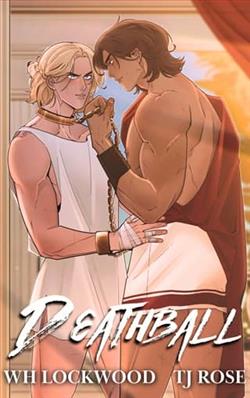
"Deathball" by W.H. Lockwood and T.J. Rose is a gripping entry into the dystopian genre, offering a raw and intense exploration of survival, identity, and forbidden love. Set against the backdrop of a brutal sport designed to entertain the masses, the novel delves deep into the psyche of its characters, Robin and Marco, as they navigate a world that demands violence for freedom.
The premise of "Deathball" is immediately arresting. Robin, torn from his home and thrust into a gladiatorial nightmare, finds himself shackled in a world where life is cheap, and death is a spectacle. The authors craft a vivid and oppressive setting that mirrors the internal struggles of the characters. The arena, with its blood-soaked sands and roaring crowds, serves as both a physical and metaphorical battleground where the characters' fates are intertwined.
Character development is a standout feature of "Deathball." Robin's transformation from a captive to a fighter is both compelling and heart-wrenching. His initial resistance to the brutality of the sport is palpable, and his gradual adaptation to the harsh realities of his new life is portrayed with nuance and depth. The authors skillfully depict Robin's internal conflict as he grapples with the need to survive against his moral compass.
Marco, the reigning champion, is equally complex. His five-year tenure as a fighter has hardened him, yet beneath his fierce exterior lies a man yearning for freedom and redemption. The dynamic between Marco and Robin is charged with tension and intrigue. Marco's obsession with Robin is not merely a mentor's interest in a promising protégé but a deeper, more dangerous connection that threatens to unravel both their lives. The authors deftly explore themes of power, vulnerability, and the thin line between love and violence.
The writing style in "Deathball" is both visceral and poetic. Lockwood and Rose employ a narrative that is rich in detail, immersing readers in the gritty reality of the Deathball arena while also delving into the emotional landscapes of their characters. The prose is punctuated with moments of stark brutality and unexpected tenderness, creating a rhythm that keeps readers engaged from start to finish. The authors' ability to balance action with introspection is reminiscent of works by Suzanne Collins and Pierce Brown, where the stakes are high, and the characters' emotional journeys are as compelling as the physical ones.
Emotionally, "Deathball" is a rollercoaster. The novel evokes a spectrum of feelings, from the adrenaline-fueled excitement of the battles to the poignant moments of connection between Robin and Marco. The tension between their roles as rivals and their growing affection for each other adds a layer of complexity to the narrative, making their relationship both a source of hope and a potential catalyst for tragedy. The authors handle this delicate balance with sensitivity, ensuring that the emotional impact resonates long after the final page.
Thematically, "Deathball" explores the concept of freedom in a world where it is a commodity to be earned through violence. The characters' struggles for autonomy and self-determination are central to the narrative, raising questions about the cost of survival and the nature of humanity in the face of dehumanizing circumstances. The novel also touches on the idea of rebellion, suggesting that love and compassion can be acts of defiance in a system designed to strip individuals of their humanity.
In comparison to other works in the dystopian genre, "Deathball" stands out for its focus on character-driven storytelling and its exploration of complex emotional landscapes. While it shares thematic elements with classics like "The Hunger Games," it carves its own niche by delving deeper into the psychological aspects of its characters and the moral ambiguities they face. The novel's exploration of forbidden love in a hostile environment adds a unique dimension to the narrative, setting it apart from more conventional dystopian tales.
Overall, "Deathball" by W.H. Lockwood and T.J. Rose is a powerful addition to the dystopian genre, offering a compelling blend of action, emotion, and introspection. Its well-developed characters, evocative writing, and thought-provoking themes make it a must-read for fans of dystopian fiction and those seeking a story that challenges the boundaries of love and survival. As readers follow Robin and Marco's journey, they are invited to reflect on the nature of freedom, the power of human connection, and the enduring spirit of rebellion in the face of oppression.



