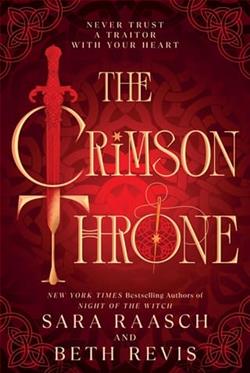
Sara Raasch's The Crimson Throne is a captivating blend of historical fiction and fantasy, a genre often referred to as "romantasy." This novel seamlessly intertwines the political intrigue of a historical drama with the enchanting elements of fantasy, creating a rich tapestry that is both engaging and thought-provoking. Fans of Raasch's previous works, particularly Night of the Witch, will find themselves once again drawn into a world where magic and history collide.
At the heart of The Crimson Throne is the theme of power and its consequences. The novel explores how power can isolate individuals, as seen through the eyes of Samson Calthorpe, whose curse has kept him at arm's length from those he loves. His journey to break free from this curse by becoming a royal spy is not just a quest for freedom but also a deeper exploration of identity and self-worth. Raasch skillfully uses Samson's character to delve into the complexities of power dynamics, both personal and political.
Alyth Graham, the other protagonist, offers a contrasting perspective on power. As the child of a fae prince and a human mother, Alyth embodies the intersection of two worlds. Her role as a protector of Mary Queen of Scots highlights the theme of loyalty and duty. Alyth's character development is particularly compelling as she navigates the treacherous waters of the Scottish court, balancing her responsibilities with her personal desires. Her internal struggle is portrayed with nuance, making her a relatable and multi-dimensional character.
The relationship between Samson and Alyth is a central element of the narrative, adding a layer of romantic tension that is both subtle and intense. Their shared suspicion of Lord Darnley and the undeniable attraction between them create a dynamic that is as complex as it is engaging. Raasch's portrayal of their evolving relationship is reminiscent of the intricate character dynamics found in works by authors like Sarah J. Maas, where romance is interwoven with larger narrative arcs.
Raasch's writing style in The Crimson Throne is both lyrical and precise, capturing the opulence of the Scottish court and the gritty reality of Samson's life in London with equal deftness. Her descriptive prowess brings the historical setting to life, immersing readers in a world where magic and reality coexist. The use of secret codes and hidden messages adds an element of mystery and intrigue, reminiscent of the works of Philippa Gregory, where historical accuracy is blended with imaginative storytelling.
Emotionally, The Crimson Throne resonates on multiple levels. The characters' struggles with identity, loyalty, and love are universal themes that will appeal to a broad audience. Raasch's ability to evoke empathy for her characters is one of the novel's strengths, allowing readers to connect deeply with their journeys. The emotional impact of the narrative is heightened by the stakes involved, as the plot to assassinate Queen Elizabeth unfolds with increasing tension.
In terms of genre, The Crimson Throne stands out as a noteworthy addition to the romantasy genre. It successfully combines elements of historical fiction with fantasy, creating a narrative that is both grounded in reality and enriched by magical elements. This blend is reminiscent of works by authors like Naomi Novik, where historical settings are infused with fantastical elements to create a unique reading experience.
Overall, Sara Raasch has crafted a compelling and immersive novel with The Crimson Throne. Its exploration of power, identity, and love is both timely and timeless, offering readers a story that is as entertaining as it is thought-provoking. The novel's rich character development, intricate plot, and evocative writing style make it a must-read for fans of historical fantasy and those looking for a story that challenges and captivates in equal measure.



