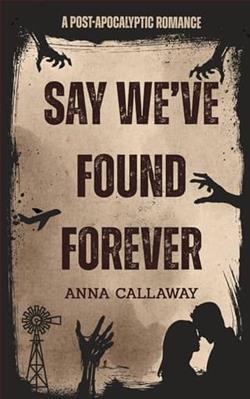
In "Say We've Found Forever" by Anna Callaway, readers are thrust into a post-apocalyptic world where survival is a daily struggle and human connections are both a risk and a necessity. This novel deftly combines elements of romance and dystopia, creating a narrative that is as much about the resilience of the human spirit as it is about the challenges of living in a world turned upside down.
The story centers on Addison, a woman who finds herself stranded on a rural farm with her young daughter after the world as she knew it ended. Her husband, who was supposed to be her partner in survival, has vanished, leaving her to fend for herself. Addison's character is immediately compelling; she is a survivor, shaped by her past in a doomsday cult where women were seen as mere vessels for repopulation. This background adds layers to her character, making her journey not just one of physical survival but also of personal liberation and empowerment.
Enter Wyatt, a man burdened with guilt and loss, who arrives at the farm claiming ownership. The tension between Addison and Wyatt is palpable from the start, as they are forced into an uneasy truce. Wyatt's proposal to share the farm for thirty days sets the stage for a slow-burning romance that is both believable and deeply affecting. Callaway's portrayal of their evolving relationship is nuanced, capturing the tentative steps toward trust and the gradual dismantling of emotional walls. Wyatt's character is a study in contrasts; he is both a protector and a man haunted by his past failures, making his journey toward redemption a central theme of the novel.
Anna Callaway's writing style is both evocative and accessible, drawing readers into the stark realities of a world ravaged by a virus. Her descriptions of the farm and its surroundings are vivid, painting a picture of isolation and desolation that mirrors the characters' internal struggles. The author skillfully balances moments of tension with quieter, introspective scenes, allowing readers to fully engage with the emotional depth of the story. The dialogue is sharp and realistic, capturing the characters' personalities and the complexities of their interactions.
The major themes of "Say We've Found Forever" revolve around survival, trust, and the possibility of new beginnings. Addison and Wyatt's journey is not just about finding safety in a dangerous world, but also about discovering what it means to truly live and love in the face of uncertainty. The novel explores the idea that even in the darkest times, hope and connection can flourish, offering a poignant reminder of the resilience of the human spirit.
Comparisons can be drawn between Callaway's work and other post-apocalyptic romances, such as "The Road" by Cormac McCarthy, though Callaway's narrative is more focused on the interpersonal dynamics and emotional growth of her characters. The novel also shares thematic similarities with Emily St. John Mandel's "Station Eleven," particularly in its exploration of how people rebuild their lives and relationships after a global catastrophe.
Emotionally, "Say We've Found Forever" is a rollercoaster, with moments of heartache and hope interwoven throughout the narrative. Callaway does not shy away from the harsh realities of her setting, yet she infuses the story with a sense of optimism that is both refreshing and inspiring. The emotional impact of the novel is heightened by the well-drawn characters, whose struggles and triumphs resonate long after the final page is turned.
In conclusion, "Say We've Found Forever" by Anna Callaway is a compelling addition to the post-apocalyptic romance genre. With its richly developed characters, engaging plot, and thought-provoking themes, the novel offers a powerful exploration of love and survival in a world forever changed. Callaway's ability to blend romance with the stark realities of a dystopian setting makes this book a must-read for fans of both genres. As readers journey with Addison and Wyatt, they are reminded of the enduring power of hope and the possibility of finding forever, even in the most unlikely of places.



