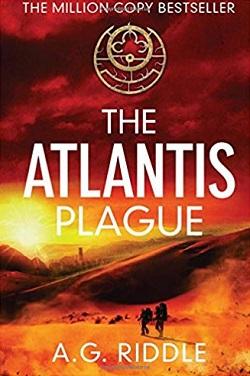
A.G. Riddle's The Atlantis Plague, the second installment in the Origin Mystery series, plunges readers into a gripping narrative that intertwines science fiction, history, and a race against time. Following the events of The Atlantis Gene, this sequel escalates the stakes as humanity faces a pandemic that has been brewing for 70,000 years, threatening to alter the very fabric of human existence.
The story begins with Dr. Kate Warner, a character who has already captured the hearts of readers in the previous book. Riddle does an excellent job of deepening her character, showcasing her resilience and intelligence as she navigates a world on the brink of collapse. The narrative thrusts Kate into a chaotic reality where nearly a billion people have succumbed to the Atlantis Plague, and those who survive are either evolving or devolving at a genetic level. This duality of transformation serves as a powerful metaphor for the potential of humanity—how crises can either elevate us or lead us to our downfall.
One of the most compelling themes in The Atlantis Plague is the exploration of human evolution and the ethical dilemmas that arise from it. The introduction of two opposing factions—the Orchid Alliance, which seeks to treat the symptoms of the plague, and the Immari, who advocate for letting the plague run its course to create a "superior" race—raises profound questions about morality, survival, and the essence of what it means to be human. Riddle invites readers to ponder whether the ends justify the means, a question that resonates deeply in today's world where scientific advancements often come with ethical quandaries.
The pacing of the novel is relentless, with Riddle expertly weaving action and suspense throughout the narrative. The stakes are high, and the tension is palpable as Kate embarks on a perilous journey across Europe and northern Africa in search of a cure. Riddle's ability to create vivid settings enhances the reading experience, immersing readers in a world that feels both familiar and hauntingly dystopian. The barren wastelands and refugee camps serve as stark reminders of the fragility of civilization, echoing real-world issues of pandemics and social collapse.
Character development is another strong suit of Riddle's writing. Kate Warner is not just a scientist; she is a multifaceted character grappling with her own fears and responsibilities. Her evolution throughout the story is compelling, as she transforms from a researcher into a reluctant hero. The supporting characters, including allies and antagonists, are well-crafted and add depth to the narrative. The conflict between the Orchid Alliance and the Immari is not merely a backdrop; it is a catalyst for character growth and moral reflection.
Riddle's writing style is engaging and accessible, making complex scientific concepts digestible for the average reader. He balances technical details with emotional depth, ensuring that the story remains relatable even as it delves into the intricacies of genetics and evolution. This balance is crucial, as it allows readers to connect with the characters on a personal level while still being captivated by the overarching mystery of the Atlantis Plague.
Moreover, the book's exploration of historical events and their impact on human evolution adds an intriguing layer to the narrative. Riddle cleverly intertwines fiction with historical facts, prompting readers to question the established narratives of human history. This aspect of the story is reminiscent of works by authors like Dan Brown and Michael Crichton, who also blend history with thrilling plots. However, Riddle distinguishes himself by focusing more on character-driven storytelling rather than solely on technological marvels.
As the plot unfolds, the tension escalates, leading to a climax that is both thrilling and thought-provoking. Riddle does not shy away from the harsh realities of the human condition, and the sacrifices made by characters in their quest for survival resonate deeply. The ending leaves readers with a sense of urgency and contemplation, prompting them to reflect on the implications of the story long after they have turned the last page.
In conclusion, The Atlantis Plague is a masterful continuation of A.G. Riddle's Origin Mystery series. It combines elements of science fiction, history, and ethical dilemmas to create a narrative that is both entertaining and intellectually stimulating. Riddle's ability to craft relatable characters and weave a complex plot ensures that readers are not only engaged but also challenged to think critically about the themes presented. For fans of apocalyptic fiction and those who appreciate a well-researched narrative, this book is a must-read. It stands as a testament to Riddle's prowess as a storyteller and his capacity to engage with profound questions about humanity's future.



