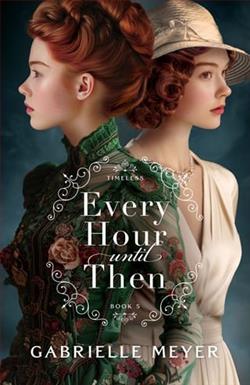
Gabrielle Meyer's novel, Every Hour until Then, is a captivating exploration of time travel, historical intrigue, and the enduring power of familial bonds. Set against the richly detailed backdrops of Victorian-era London and World War II Washington, DC, the book offers a thrilling narrative that deftly intertwines two distinct periods, each fraught with its own dangers and mysteries. This dual timeline is not just a backdrop but a pivotal element that shapes the protagonist's journey, offering readers a unique perspective on history and destiny.
The protagonist, Kathryn, is a compelling character whose ability to time-cross between two eras adds a layer of complexity to her already challenging life. Her character development is one of the novel's strongest aspects, as Meyer skillfully portrays her as a woman torn between duty and desire, history and the present. Kathryn's journey is not just a physical one but an emotional and ethical odyssey, as she grapples with the knowledge that her sister is destined to become Jack the Ripper's final victim. This chilling revelation propels her into a race against time, where the stakes are nothing less than life and death.
Meyer's writing style is both evocative and immersive, drawing readers into the atmospheric settings of both London and Washington, DC. Her attention to historical detail is meticulous, bringing to life the gritty streets of Victorian London and the tense, pre-war atmosphere of 1938 Washington. This vivid world-building is reminiscent of the works of authors like Kate Morton and Susanna Kearsley, who similarly blend historical fiction with elements of mystery and romance. Meyer's prose is lyrical yet precise, capturing the nuances of each era while maintaining a brisk narrative pace that keeps readers engaged.
The novel's major themes revolve around the concepts of time, fate, and sacrifice. Kathryn's ability to move between times forces her to confront the idea that history is not fixed but malleable, subject to the choices she makes. This theme is explored with depth and sensitivity, as Kathryn must decide whether to alter the course of history to save her sister, even if it means sacrificing her own happiness. The moral and ethical dilemmas she faces are thought-provoking, inviting readers to ponder the nature of destiny and the extent of one's control over it.
Emotionally, Every Hour until Then is a rollercoaster, as Meyer expertly balances moments of tension and suspense with poignant scenes of love and loss. The relationship between Kathryn and her childhood friend, who aids her in her quest, adds a romantic dimension to the story that is both tender and fraught with uncertainty. Their interactions are charged with emotion, reflecting the broader theme of love's enduring power across time and circumstance. This emotional depth is a testament to Meyer's skill as a storyteller, as she weaves a narrative that is as emotionally resonant as it is thrilling.
In comparison to other time-travel narratives, Meyer's novel stands out for its intricate plotting and character-driven story. While it shares thematic similarities with works like Audrey Niffenegger's The Time Traveler's Wife, Meyer's focus on historical mystery and familial bonds gives Every Hour until Then a unique flavor. The novel's blend of suspense, romance, and historical intrigue will appeal to fans of Diana Gabaldon's Outlander series, yet it remains distinct in its exploration of the darker aspects of history and the moral complexities of time travel.
Overall, Every Hour until Then is a masterfully crafted novel that will captivate readers with its rich historical detail, compelling characters, and thought-provoking themes. Gabrielle Meyer has created a story that is both entertaining and intellectually engaging, offering a fresh take on the time-travel genre. For those who enjoy historical fiction with a twist of mystery and romance, this book is a must-read. Its emotional impact and intricate narrative will linger long after the final page is turned, making it a standout addition to the world of historical fiction.



