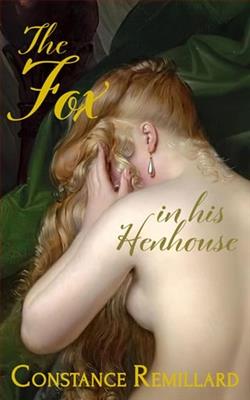
Constance Remillard's novel, "The Fox: in his Henhouse," the first installment in The Dubious Mates series, is a compelling exploration of passion, power dynamics, and societal constraints set against the backdrop of the late Regency era. This historical romance delves into the lives of Lord Wellesley and Miss Merrinan, two characters whose paths cross under circumstances that challenge their preconceived notions of duty, desire, and destiny.
The novel opens with Lord Wellesley, a man of noble birth, who finds himself fleeing London after a humiliating rejection at the altar. His retreat to the dilapidated Almsdale Abbey in Cumberland is not just a physical escape but a metaphorical journey into self-discovery and redemption. Wellesley is a character torn between the expectations of his social standing and his personal desires. His initial portrayal as a man seeking solace quickly evolves into a more complex figure as he encounters Miss Merrinan, the housekeeper whose presence disrupts his solitary existence.
Miss Merrinan, on the other hand, is a character defined by resilience and pragmatism. Her role as both housekeeper and mistress is emblematic of the limited choices available to women of her station in Regency society. Remillard crafts Merrinan with a depth that allows readers to empathize with her plight. Her internal conflict between duty to her family and her burgeoning feelings for Wellesley adds layers to her character, making her more than just a romantic interest but a fully realized individual navigating a patriarchal world.
The themes of power and consent are central to "The Fox: in his Henhouse." Remillard does not shy away from the complexities of these themes, presenting them with a frankness that recalls the bodice rippers of yore. The novel's exploration of dubious consent and physical punishment may not be for every reader, but it is handled with a literary finesse that invites reflection on the nature of desire and autonomy. The power dynamics between Wellesley and Merrinan are intricate, with both characters wielding influence over the other in unexpected ways. This interplay challenges traditional gender roles and invites readers to question the societal norms of the time.
Remillard's writing style is both steamy and sophisticated, a balance that is difficult to achieve in the romance genre. Her prose is lush and evocative, painting vivid pictures of the rugged Cumberland landscape and the decaying grandeur of Almsdale Abbey. The intimate scenes are written with a politeness that maintains the novel's historical authenticity while still delivering the heat that fans of open-door romances crave. This style is reminiscent of authors like Lisa Kleypas and Sarah MacLean, who similarly blend historical detail with passionate storytelling.
The emotional impact of "The Fox: in his Henhouse" is significant, as Remillard deftly weaves a narrative that is as much about personal growth as it is about romance. Wellesley's journey from a man running from his past to one who confronts his emotions head-on is compelling. Similarly, Merrinan's evolution from a woman resigned to her fate to one who actively shapes her future is inspiring. Their relationship is a testament to the transformative power of love, even when it arises from less-than-ideal circumstances.
In comparison to other works in the historical romance genre, Remillard's novel stands out for its willingness to tackle difficult themes with nuance and sensitivity. While some may find the elements of dubious consent challenging, they are integral to the story's exploration of autonomy and power. For readers who appreciate a romance that pushes boundaries while still delivering a satisfying emotional arc, "The Fox: in his Henhouse" offers a rewarding experience.
Overall, Constance Remillard has crafted a novel that is both provocative and poignant. "The Fox: in his Henhouse" is a testament to her ability to blend historical detail with complex character development and thematic depth. It is a book that will appeal to fans of historical romance who are looking for a story that is as intellectually engaging as it is emotionally satisfying. As the first book in The Dubious Mates series, it sets a high bar for what is sure to be a captivating exploration of love and power in Regency England.



