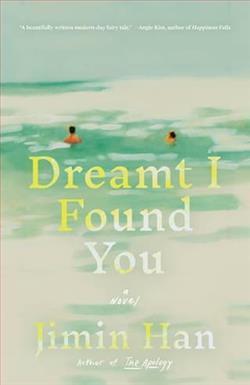
Jimin Han's novel, Dreamt I Found You, is a captivating exploration of love, fate, and cultural heritage, seamlessly weaving together the threads of a contemporary romance with the rich tapestry of Korean folklore. This modern retelling of Korea's classic love story, akin to Shakespeare's Romeo and Juliet, invites readers into a world where the past and present collide, and where the boundaries of destiny are both challenged and revered.
At the heart of Dreamt I Found You is Dahee Shin, a thirty-year-old woman whose life has been intricately intertwined with that of her cousin, Channing. Han crafts Dahee as a deeply relatable protagonist, whose sense of duty and familial loyalty drives the narrative forward. Her promise to protect Channing, made in childhood, becomes the fulcrum upon which the story pivots. Through Dahee's eyes, readers are introduced to a Korean American community in a New England beach town, a setting that Han describes with vivid detail and a palpable sense of place.
Channing, the idealistic cousin, is haunted by the tragic tale of Chunhyang and Mongryong, Korea's own star-crossed lovers. Her romance with Minjae Oh is depicted with tenderness and authenticity, capturing the essence of young love while also highlighting the societal pressures that threaten to tear them apart. Han's portrayal of their relationship is both poignant and realistic, drawing readers into their world with an emotional depth that resonates long after the final page is turned.
One of the novel's most compelling aspects is its exploration of the rigid class system and the power dynamics at play within it. Kent Cho, the manipulative local politician, embodies the societal forces that seek to control and constrain the lives of the characters. His obsession with Channing serves as a stark reminder of the dangers of unchecked power and the lengths to which individuals will go to maintain their status. Han's nuanced depiction of these themes adds layers of complexity to the narrative, inviting readers to reflect on the broader implications of class and privilege.
Han's writing style is both lyrical and evocative, imbuing the story with a sense of magic and wonder that is reminiscent of the folklore that inspires it. Her use of language is both precise and poetic, capturing the emotional nuances of her characters with a deft touch. The novel's pacing is deliberate, allowing readers to fully immerse themselves in the world Han has created, while the interweaving of Korean folklore adds a rich cultural dimension that enhances the story's depth and resonance.
The emotional impact of Dreamt I Found You is profound, as Han masterfully balances moments of joy and sorrow, hope and despair. The novel's exploration of premonition and the idea of a predetermined fate is both thought-provoking and deeply moving, challenging readers to consider the extent to which our lives are shaped by forces beyond our control. Han's ability to evoke such a wide range of emotions is a testament to her skill as a storyteller, and it is this emotional richness that sets the novel apart from other works in the genre.
In comparison to other contemporary retellings of classic love stories, such as Madeline Miller's Circe or Emily St. John Mandel's The Glass Hotel, Han's novel stands out for its unique cultural perspective and its seamless integration of folklore and modernity. The novel's exploration of identity, belonging, and the immigrant experience adds an additional layer of complexity, making it a compelling read for anyone interested in stories that transcend cultural boundaries.
Overall, Dreamt I Found You is a beautifully crafted novel that offers a fresh and insightful take on a timeless tale. Jimin Han's ability to blend the past with the present, the mythical with the real, results in a story that is both enchanting and thought-provoking. For fans of literary fiction and contemporary romance, this novel is a must-read, offering a poignant reminder of the enduring power of love and the resilience of the human spirit.



