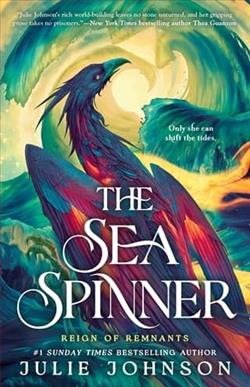
Julie Johnson's "The Sea Spinner" is a compelling continuation of the saga that began with "The Wind Weaver." As a sequel to the #1 Sunday Times bestseller, this novel delves deeper into the enchanting world of magic and conflict, focusing on the protagonist, Rhya Fleetwood, as she navigates the complexities of power, love, and identity. Johnson's narrative is a rich tapestry of fantasy elements, woven with the threads of personal growth and the struggle for autonomy.
At the heart of "The Sea Spinner" is Rhya Fleetwood, a character whose journey from a pawn to a powerful entity is both engaging and relatable. Rhya's development is intricately portrayed, highlighting her determination to master her wind-weaving abilities. Johnson skillfully captures Rhya's internal conflict as she grapples with her role in a world that often seeks to control her. This theme of self-discovery and empowerment is central to the novel, resonating with readers who appreciate strong, dynamic characters in fantasy literature.
Rhya's relationships with the two central male figures, Penn and King Soren, add layers of complexity to her character arc. The tension between Rhya and Penn, the Remnant of Fire, is palpable, fueled by a shared history and a simmering attraction. Johnson explores the nuances of this relationship with a deft hand, creating a dynamic that is both passionate and fraught with challenges. In contrast, King Soren, the Remnant of Water, offers Rhya a different kind of connection—one that is rooted in understanding and shared potential. The dichotomy between fire and water, passion and calm, is a recurring motif that enriches the narrative, providing a metaphorical backdrop to Rhya's internal and external conflicts.
Julie Johnson's writing style in "The Sea Spinner" is both lyrical and immersive, drawing readers into a world where magic and reality intertwine seamlessly. Her prose is evocative, painting vivid images of the island city of Hylios and the elemental forces at play. Johnson's ability to balance action with introspection ensures that the story maintains a compelling pace while allowing for moments of reflection and emotional depth. This balance is reminiscent of the works of authors like Sarah J. Maas and Leigh Bardugo, who similarly excel in creating intricate fantasy worlds populated by richly developed characters.
The emotional impact of "The Sea Spinner" is significant, as Johnson explores themes of loss, loyalty, and the quest for identity. Rhya's journey is marked by moments of heartbreak and triumph, each contributing to her growth as a character. The novel's exploration of the consequences of power and the burden of responsibility adds a layer of gravitas to the narrative, inviting readers to ponder the moral complexities faced by the characters. Johnson's ability to evoke empathy and understanding for her characters is a testament to her skill as a storyteller, ensuring that readers are invested in Rhya's fate and the broader conflict that unfolds.
In "The Sea Spinner," Julie Johnson has crafted a fantasy novel that is both a thrilling adventure and a profound exploration of personal growth. The interplay of magic and emotion, coupled with the richly drawn characters, makes this book a standout in the genre. Fans of "The Wind Weaver" will find much to appreciate in this sequel, while new readers will be drawn in by Johnson's masterful storytelling and the promise of a world where magic and destiny collide. As Rhya Fleetwood steps into her power, "The Sea Spinner" invites readers to embark on a journey of discovery, where the tides of fate are ever-changing and the possibilities are endless.



