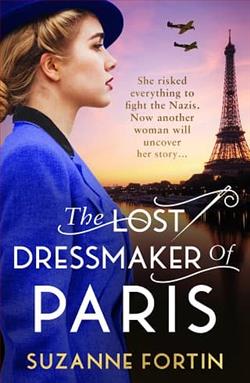
Suzanne Fortin's novel, The Lost Dressmaker of Paris, is a poignant exploration of courage, love, and resilience set against the backdrop of World War II. The dual timeline narrative, which alternates between 1942 Paris and 2022 England, offers readers a compelling journey through history and personal discovery. Fortin masterfully intertwines the lives of two women, Nathalie Leroux and Darcie, whose stories are separated by decades yet connected by a mysterious suitcase and a silk evening dress.
At the heart of the novel is Nathalie Leroux, a young woman whose dreams of becoming a renowned designer are overshadowed by the grim realities of Nazi-occupied Paris. Fortin paints a vivid picture of Nathalie's world, where every decision is fraught with danger and every stitch she sews could be her last. The author skillfully captures the tension and fear of the era, immersing readers in a time when survival required not just bravery but also cunning. Nathalie's character is richly developed, evolving from a hopeful dreamer into a determined resistance fighter. Her transformation is both believable and inspiring, highlighting the theme of personal growth amidst adversity.
In contrast, the contemporary storyline follows Darcie, a woman in England who stumbles upon Nathalie's legacy in the form of an abandoned suitcase. Darcie's quest to uncover the truth about Nathalie Leroux serves as a catalyst for her own journey of self-discovery. Fortin deftly uses Darcie's investigation to bridge the past and present, weaving a narrative that is as much about uncovering history as it is about understanding oneself. The character of Darcie is relatable and engaging, her curiosity and determination mirroring that of Nathalie's, albeit in a different context.
The novel's exploration of themes such as bravery, sacrifice, and the enduring power of love is both profound and moving. Fortin does not shy away from depicting the harsh realities of war, yet she balances this with moments of tenderness and hope. The relationship between Nathalie and her loved ones, particularly the person she loses to the Germans, adds an emotional depth to the story that resonates long after the final page. The theme of love, in its various forms, is a constant undercurrent, driving the characters' actions and providing solace amidst the chaos.
Fortin's writing style is elegant and evocative, capturing the essence of both time periods with precision and care. Her attention to detail brings 1940s Paris to life, from the bustling streets to the opulent interiors of the Ritz hotel. Similarly, the modern-day setting is depicted with a keen eye, making Darcie's world feel just as tangible. The author's ability to seamlessly transition between the two timelines is commendable, maintaining a narrative flow that keeps readers engaged and invested in both stories.
The emotional impact of The Lost Dressmaker of Paris is undeniable. Fortin's portrayal of the characters' struggles and triumphs is both heart-wrenching and uplifting. The novel invites readers to reflect on the sacrifices made by ordinary women during wartime and the ways in which their legacies continue to shape the present. The emotional resonance of the story is enhanced by Fortin's skillful use of symbolism, particularly the dress and sketches, which serve as tangible links between the past and present.
In comparison to other works in the historical fiction genre, Fortin's novel stands out for its focus on the fashion industry and the unique role it played during the war. This aspect of the story adds a fresh perspective to the genre, reminiscent of novels like The Nightingale by Kristin Hannah, which also highlights the contributions of women in the resistance. However, Fortin's emphasis on the art of dressmaking provides a distinctive lens through which to view the era, offering readers a deeper understanding of the intersection between creativity and survival.
Overall, The Lost Dressmaker of Paris by Suzanne Fortin is a beautifully crafted novel that will appeal to fans of historical fiction and those interested in stories of resilience and love. The book's well-developed characters, compelling themes, and evocative writing style make it a memorable read that lingers in the mind long after the story concludes. Fortin's ability to weave together past and present narratives with such skill and sensitivity is a testament to her talent as a storyteller, ensuring that this novel will find a cherished place on the shelves of many readers.



