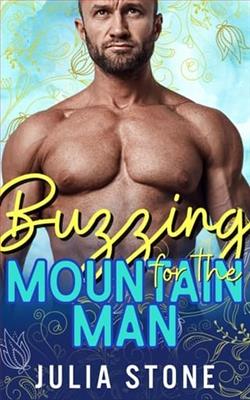
Julia Stone’s Buzzing for the Mountain Man is a delightful foray into the world of opposites attracting, set against the charming backdrop of a bustling farmer’s market. At its core, the novel is a heartwarming exploration of love that defies age and personality differences, wrapped in a narrative that is as sweet and inviting as the honey that protagonist Daliah sells.
The story revolves around two vividly contrasting characters: Daliah, a vibrant and lively vendor of honey and beeswax products, and River Pierce, a stoic and seemingly grumpy jam seller. Their interactions are initially marked by a palpable tension, largely stemming from River’s apparent disdain for Daliah’s exuberance. However, as the narrative unfolds, it becomes clear that this tension is a mask for deeper, unacknowledged feelings.
Stone’s character development is particularly noteworthy. Daliah is portrayed as a beacon of warmth and positivity, her character practically leaping off the page with her colorful personality and infectious laughter. She embodies the spirit of someone who embraces life fully, a trait that is both her strength and her vulnerability. Her internal monologue reveals a woman who is both self-aware and introspective, grappling with her unexpected attraction to River.
River, on the other hand, is a study in contrasts. Initially presented as a curmudgeonly figure, his character gradually reveals layers of depth and complexity. Stone skillfully peels back these layers, exposing a man who is not only attentive and protective but also deeply affected by Daliah’s presence. His struggle with his feelings is portrayed with a subtlety that adds a rich texture to his character, making his eventual transformation all the more satisfying.
Themes of age difference and the breaking down of personal barriers are central to the narrative. Stone handles these themes with a deft touch, avoiding clichés and instead offering a nuanced portrayal of a relationship that defies societal expectations. The age gap between Daliah and River is acknowledged but never becomes a focal point of conflict; rather, it serves as a backdrop against which their emotional connection is highlighted.
One of the most compelling aspects of the novel is the way Stone captures the setting of the farmer’s market. The market is more than just a backdrop; it is a living, breathing entity that influences the characters and their interactions. The sights, sounds, and smells of the market are vividly described, immersing the reader in a world that feels both familiar and enchanting. This setting serves as a perfect metaphor for the bustling, unpredictable nature of Daliah and River’s relationship.
In terms of narrative style, Stone’s writing is both engaging and evocative. Her use of alternating perspectives allows readers to delve deeply into the minds of both protagonists, creating a balanced and intimate portrayal of their evolving relationship. The dialogue is sharp and often humorous, providing a counterpoint to the more introspective moments of the novel.
Comparatively, Buzzing for the Mountain Man shares thematic similarities with works by authors like Debbie Macomber and Susan Mallery, who also excel in crafting stories of unlikely romances set in small-town environments. However, Stone distinguishes herself with her unique blend of humor and emotional depth, as well as her ability to create characters who are both relatable and compelling.
Overall, Buzzing for the Mountain Man is a charming and heartfelt read that will appeal to fans of contemporary romance. Its exploration of love that transcends superficial barriers is both refreshing and inspiring, leaving readers with a sense of hope and the belief that true connection can be found in the most unexpected places. Julia Stone has crafted a novel that is as sweet and satisfying as the honey that plays such a central role in her story, making it a must-read for anyone looking to be swept away by a tale of love and self-discovery.



