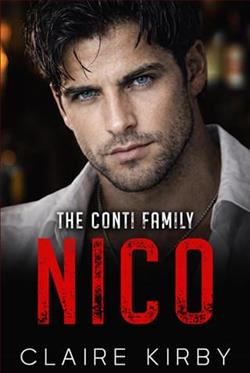
Claire Kirby's Nico is a gripping tale that delves into the dark, seductive world of organized crime, where desperation and desire intertwine in a narrative that is as compelling as it is provocative. The book's premise, centered around the auctioning of one's innocence to save a loved one, sets the stage for a story that explores themes of sacrifice, power dynamics, and unexpected love.
The protagonist, an entry-level assistant, finds herself in an unimaginable predicament. Her father’s terminal illness and the looming cost of surgery push her to make a decision that challenges her morals and self-worth. This setup is not only a testament to the lengths one might go to for family but also serves as a critique of societal structures that leave individuals with such dire choices. Kirby masterfully portrays the protagonist's internal conflict, capturing the essence of desperation that makes beggars of us all.
Enter Nico Conti, the enigmatic mafia enforcer whose presence is both alluring and intimidating. Kirby crafts Nico as a complex character, embodying the duality of danger and allure that is often romanticized in mafia narratives. His initial introduction as the highest bidder at the auction sets the tone for a relationship that is fraught with tension and unspoken desires. Nico’s character development is a highlight of the novel, as readers are gradually exposed to the layers beneath his hardened exterior.
The chemistry between the protagonist and Nico is palpable, with Kirby skillfully building a dynamic that oscillates between fear and fascination. The power dynamics at play are central to the story, with the protagonist initially feeling powerless in the face of Nico’s commanding presence. However, as the narrative unfolds, there is a shift in this dynamic, with the protagonist finding her own strength and agency within the confines of her situation. This evolution is crucial, as it transforms the story from one of mere survival to one of empowerment and unexpected love.
Kirby’s writing is evocative, painting vivid images of both the opulence and the underlying menace of the mafia world. The pacing of the novel is well-executed, with moments of tension and passion interspersed with introspective passages that delve into the characters' psyches. The author’s ability to maintain a balance between plot-driven action and character-driven introspection is commendable, ensuring that readers remain engaged throughout.
The theme of unexpected love is a central thread in Nico, with the protagonist’s initial terror giving way to a deeper, more complex connection with Nico. This transformation is handled with nuance, avoiding the pitfalls of romanticizing toxic relationships. Instead, Kirby presents a narrative where love emerges from understanding and mutual respect, even in the most unlikely of circumstances. The revelation of the protagonist’s pregnancy adds another layer to the story, raising the stakes and deepening the emotional complexity of the characters' relationship.
In comparison to other works within the mafia romance genre, such as Cora Reilly’s Born in Blood Mafia Chronicles or J.J. McAvoy’s Ruthless People, Nico stands out for its focus on character development and emotional depth. While it shares common tropes with these stories, such as the allure of the dangerous hero and the innocent heroine, Kirby’s novel distinguishes itself through its exploration of personal growth and empowerment within the context of a seemingly inescapable world.
Overall, Nico is a captivating read that offers more than just a tale of forbidden romance. It is a story of resilience, transformation, and the unexpected paths that life can take. Claire Kirby has crafted a novel that not only entertains but also provokes thought about the nature of power, choice, and love. For readers who enjoy a blend of romance, suspense, and character-driven storytelling, Nico is a must-read that promises to leave a lasting impression.



