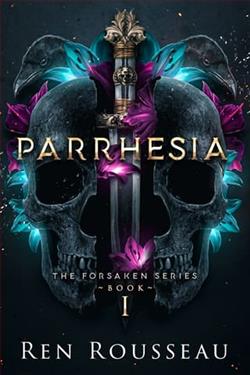
Ren Rousseau’s Parrhesia is a compelling exploration of love, power, and the eternal struggle between fate and free will. Set against the backdrop of a fantastical world where magic and myth intertwine with the mundane, the novel presents a narrative that is both richly imaginative and deeply resonant with contemporary themes.
The story centers on two formidable women, Adaela ÓDubhlaoich and Vada Livinicus, whose lives are intricately woven into the fabric of a world teetering on the brink of transformation. Adaela, the heir to the Unseelie Court, is a character of profound depth and complexity. Her decision to abdicate the throne and establish the Catervae Pax—a utopian society in St. Louis—serves as a powerful commentary on the potential for change and the courage required to pursue it. Rousseau skillfully portrays Adaela’s internal conflict, as she grapples with her deadly magic and the responsibilities of leadership. Her journey is one of self-discovery and redemption, as she seeks to create a world where beings can thrive without the constraints of traditional power structures.
In contrast, Vada Livinicus offers a poignant exploration of the consequences of defying divine authority. Cursed by the God who created her, Vada is a Succubus who feeds off pleasure without ever experiencing it herself. Her character is a testament to resilience and the enduring human spirit, as she navigates the complexities of her existence and the prophecy that offers a glimmer of hope. Rousseau’s portrayal of Vada is both empathetic and empowering, highlighting her struggle to reclaim her autonomy and find meaning in a world that has sought to diminish her.
The interplay between Adaela and Vada is one of the novel’s most compelling aspects. Their relationship is a nuanced exploration of trust, loyalty, and the power of shared purpose. As they confront the forces that threaten their vision of peace, they must also confront their own fears and insecurities. Rousseau deftly captures the tension and camaraderie between these two women, creating a dynamic that is both captivating and emotionally resonant.
Parrhesia is not merely a tale of personal transformation; it is also a profound meditation on the nature of power and its potential for both creation and destruction. The novel’s exploration of the Catervae Pax as a utopian ideal raises important questions about the feasibility of such societies and the challenges inherent in dismantling entrenched systems of power. Rousseau’s narrative is a timely reminder of the importance of vigilance and the need to protect the vulnerable from those who seek to exploit them.
Thematically, Parrhesia shares similarities with works such as Margaret Atwood’s The Handmaid’s Tale and Naomi Alderman’s The Power, both of which explore the dynamics of power and resistance. However, Rousseau’s novel distinguishes itself through its rich tapestry of myth and magic, which adds a layer of complexity and wonder to the narrative. The world-building in Parrhesia is meticulous and immersive, drawing readers into a universe where the boundaries between the fantastical and the real are artfully blurred.
Rousseau’s prose is both lyrical and incisive, capturing the beauty and brutality of the world she has created. Her ability to weave intricate plots with profound philosophical insights is a testament to her skill as a storyteller. The pacing of the novel is well-balanced, with moments of introspection interspersed with action and suspense, keeping readers engaged from beginning to end.
One of the novel’s most significant achievements is its portrayal of diverse and multidimensional characters. Rousseau’s commitment to representing a wide range of identities and experiences is evident in her nuanced characterizations and the complexity of the relationships she depicts. This inclusivity adds depth and authenticity to the narrative, allowing readers to see themselves reflected in the story’s characters and themes.
In conclusion, Parrhesia is a masterful blend of fantasy and social commentary, offering a thought-provoking exploration of love, power, and the possibility of change. Ren Rousseau has crafted a narrative that is both timeless and timely, inviting readers to reflect on the world around them and the role they play in shaping it. For those seeking a novel that challenges conventions and inspires introspection, Parrhesia is a must-read.



