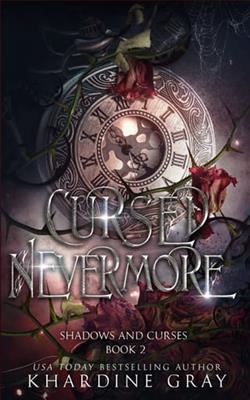
Khardine Gray's Cursed Nevermore is a spellbinding journey through a world where time resets every thirty days, memories are ephemeral, and love is both a curse and a salvation. The novel weaves a complex tapestry of magic, romance, and self-discovery, inviting readers into a narrative that is as enchanting as it is haunting.
At the heart of the story is the protagonist, a young woman living on borrowed time, whose world resets every month, erasing her memories and forcing her to start anew. This cyclical amnesia is not just a plot device but a profound metaphor for the human struggle to hold onto identity and purpose amidst life's relentless changes. Gray masterfully uses this theme to explore the fragility of memory and the enduring quest for truth and belonging.
The character development in Cursed Nevermore is both intricate and compelling. The protagonist's journey is one of self-discovery, as she grapples with the loss of her memories and the looming shadow of her curse. Her engagement to a man she loathes adds a layer of tension and urgency to her quest, highlighting the theme of choice versus destiny. The introduction of Wolfe Nightblade, the enigmatic Fae prince, adds depth to the narrative, challenging the protagonist's perceptions of love and loyalty.
Wolfe Nightblade is a character shrouded in mystery and allure. His connection to the protagonist is both a source of conflict and a catalyst for her transformation. Gray skillfully crafts Wolfe as a complex figure—an enemy turned lover, a Hades to the protagonist's Persephone. This dynamic is reminiscent of the classic mythological tale, yet Gray infuses it with fresh energy and emotional depth. The chemistry between Wolfe and the protagonist is palpable, their interactions charged with tension and longing.
The novel's setting—a world teetering on the brink of war—serves as a backdrop for the protagonist's internal struggle. The impending conflict between realms mirrors her own battle between fate and choice, between the girl she was and the one she is destined to become. Gray's world-building is rich and immersive, drawing readers into a realm where magic and reality intertwine seamlessly.
One of the most striking aspects of Cursed Nevermore is its exploration of love as both a destructive and redemptive force. The protagonist's relationship with Wolfe challenges her to confront her fears and desires, to question the boundaries of her heart. This theme is echoed in the novel's portrayal of war—not just as a physical battle, but as a metaphor for the internal conflicts that define us.
Gray's prose is lyrical and evocative, capturing the emotional intensity of the protagonist's journey. Her use of vivid imagery and poetic language enhances the novel's dreamlike quality, drawing readers into a world where reality and fantasy blur. The narrative's pacing is well-crafted, balancing moments of introspection with action and suspense.
In comparison to other works in the fantasy romance genre, Cursed Nevermore stands out for its unique premise and emotional depth. Fans of Sarah J. Maas's A Court of Thorns and Roses series will find similarities in the exploration of complex relationships and the blending of myth and magic. However, Gray's novel offers a distinct voice and perspective, focusing more on the psychological and emotional aspects of its characters.
Overall, Cursed Nevermore is a captivating tale that resonates with readers on multiple levels. Its themes of memory, identity, and love are universal, yet Gray presents them in a way that feels fresh and original. The novel's impact lies in its ability to evoke both wonder and introspection, leaving readers pondering the nature of destiny and the power of choice long after the final page is turned.
For those seeking a story that combines the allure of fantasy with the depth of character-driven drama, Cursed Nevermore is a must-read. Khardine Gray has crafted a narrative that is both timeless and timely, a testament to the enduring power of storytelling.



