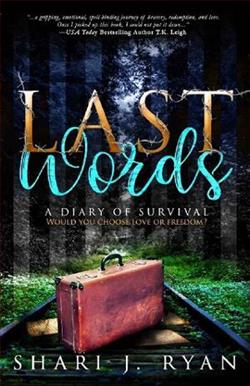
Shari J. Ryan's Last Words is a poignant exploration of love, loss, and the enduring power of memory, deftly weaving together the threads of historical fiction and contemporary narrative. The novel's dual timeline structure, alternating between the harrowing experiences of Amelia during World War II and her granddaughter Emma in the present day, creates a rich tapestry that blurs the lines between fiction and reality, inviting readers to reflect on the complexities of human relationships and the indelible impact of the past on the present.
At the heart of the novel is the character of Amelia, a young woman whose life is irrevocably altered by the horrors of the Holocaust. Ryan's portrayal of Amelia is both haunting and deeply empathetic, capturing the resilience and vulnerability of a woman caught in the throes of unimaginable adversity. The narrative vividly depicts the brutal realities of life in a concentration camp, yet it is Amelia's inner strength and capacity for love that shine through, offering a glimmer of hope amidst the darkness. Her interactions with a Nazi officer, who claims to be a prisoner himself, add a layer of complexity to the story, challenging readers to question the nature of good and evil and the possibility of redemption in the most unlikely of circumstances.
In contrast, Emma's journey in the present day serves as a bridge between the past and the future, as she uncovers the secrets hidden within her grandmother's diary. Emma's character is relatable and compelling, embodying the universal quest for identity and understanding. Her discovery of Amelia's past forces her to confront her own beliefs about love and morality, ultimately leading her to reevaluate her own life choices. Ryan skillfully uses Emma's narrative to explore themes of legacy and the enduring influence of family history, illustrating how the echoes of the past continue to shape the present.
One of the novel's most striking features is its exploration of forbidden love, a theme that resonates throughout both timelines. Amelia's relationship with the Nazi officer is fraught with tension and ambiguity, challenging societal norms and raising questions about the boundaries of love and loyalty. Similarly, Emma's journey of self-discovery prompts her to consider the nature of love in her own life, as she grapples with the implications of her grandmother's revelations. Ryan's nuanced portrayal of these relationships underscores the idea that love is not merely an emotion, but an action that transcends time and circumstance.
The novel's structure, alternating between past and present, is executed with precision and skill, allowing readers to experience the unfolding of Amelia's story alongside Emma's discoveries. This dual narrative approach not only enhances the emotional depth of the story but also creates a sense of suspense and intrigue, as readers are drawn into the mystery of Amelia's past and its impact on Emma's present. Ryan's prose is both lyrical and evocative, capturing the emotional intensity of the characters' experiences while maintaining a sense of authenticity and historical accuracy.
In comparison to other works of historical fiction that explore similar themes, such as Kristin Hannah's The Nightingale or Anthony Doerr's All the Light We Cannot See, Last Words stands out for its intimate focus on the personal and familial dimensions of history. While these novels also delve into the complexities of love and survival during wartime, Ryan's emphasis on the intergenerational impact of trauma and the power of storytelling offers a fresh perspective on the genre. The novel's exploration of the blurred lines between fiction and non-fiction further distinguishes it, inviting readers to consider the ways in which personal narratives can illuminate broader historical truths.
Overall, Last Words is a beautifully crafted and emotionally resonant novel that offers a profound meditation on the enduring power of love and memory. Through its compelling characters and richly layered narrative, Shari J. Ryan invites readers to reflect on the complexities of human relationships and the ways in which the past continues to shape our lives. The novel's exploration of forbidden love and moral ambiguity challenges readers to question their own beliefs and assumptions, ultimately leaving a lasting impact that lingers long after the final page is turned.
For those seeking a story that is both heart-wrenching and uplifting, Last Words is a must-read, offering a powerful reminder of the resilience of the human spirit and the enduring legacy of love.



